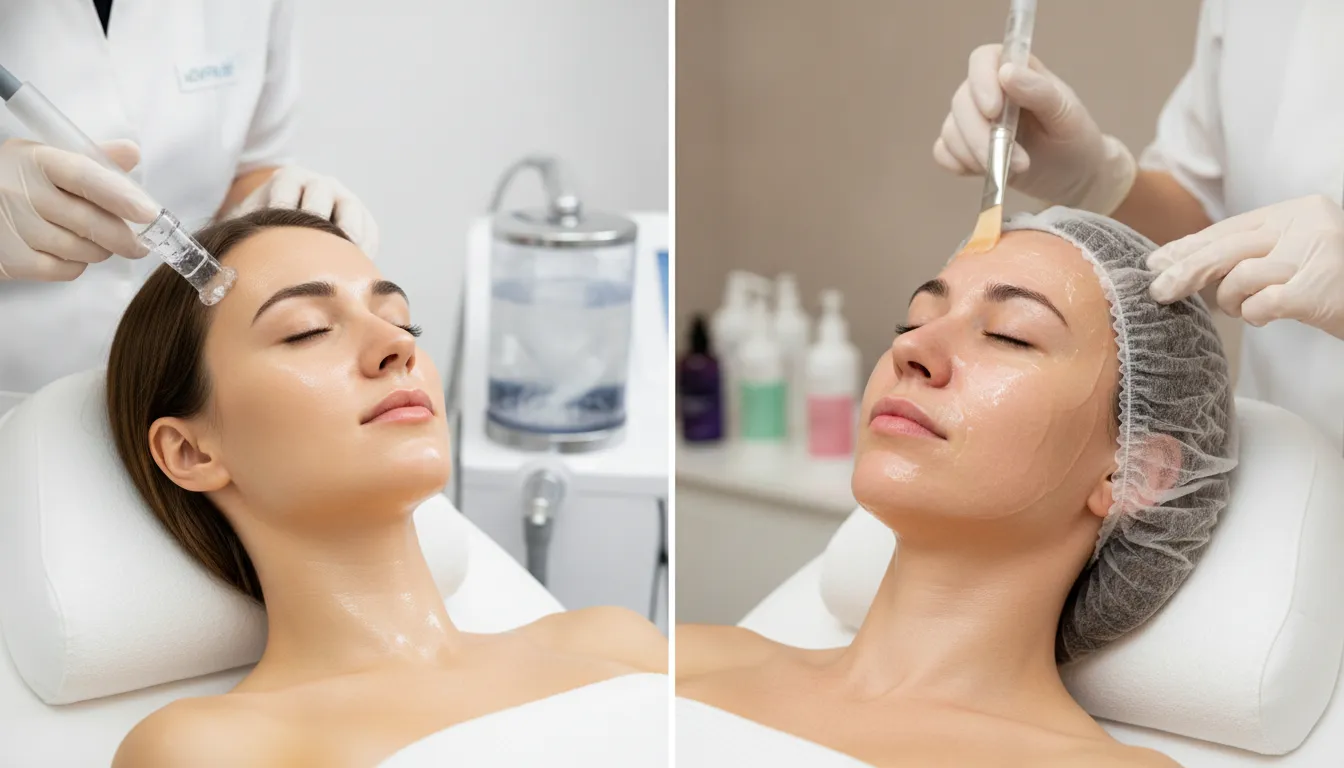
A skin treatment may sound appealing until you wonder whether you’ll leave with redness, flaking, or a change to your usual routine. Recovery is one of the key differences between a HydraFacial and a chemical peel. HydraFacial often involves little visible downtime, while a peel’s recovery depends on its depth and your skin’s response. This guide to Hydrofacial treatment vs. chemical peel looks at how each procedure works, what temporary effects may occur, and how to plan around your schedule. You’ll also find questions to ask about aftercare and realistic results, so you can discuss your options with a qualified provider before making a decision.
Key Takeaways
- Know how each treatment works: HydraFacial combines cleansing, surface exfoliation, pore extraction, and serums. A chemical peel uses a solution to exfoliate, with depth and recovery shaped by its strength.
- Choose based on your skin and goals: Consider your main concerns, skin sensitivity, health history, and preferred recovery time. A dermatologist can help you decide which option may suit you.
- Prepare for treatment and aftercare: Ask about expected results, risks, cost, and timing. Follow your provider’s care instructions and protect your skin from the sun.
What Is a HydraFacial, and How Does It Work?
A HydraFacial is a noninvasive cosmetic treatment that combines cleansing, exfoliation, pore extraction, and serum application. A handheld device delivers the treatment in steps, while the provider adjusts the products and settings to your skin. The process is often described as gentle, but comfort and results vary. Ask your provider what the treatment involves and whether it suits your skin concerns.
Cleanse and exfoliate skin with a device
The treatment usually begins with a cleanse to remove makeup, oil, and surface residue. The provider then uses the device to exfoliate the outer layer of skin, helping loosen dead skin cells and leave the surface feeling smoother.
Some treatment plans include a mild peeling solution as part of this step. Products and intensity can vary, so ask which solution your provider plans to use, especially if you have sensitive or easily irritated skin. A step-by-step HydraFacial guide describes cleansing and exfoliation as the first stages of the treatment. Tell your provider about any irritation or active skin concerns before your appointment.
Use gentle suction to clear pore debris
Next, the device uses controlled suction to draw oil and debris from pores. This step, often called extraction, may help skin look less congested. Many people describe the sensation as mild, though it can feel different depending on your skin and the provider’s technique.
HydraFacial does not permanently shrink pores or stop them from becoming clogged again. Oil production, skincare habits, and other factors can affect how your skin looks after treatment. It is also not a substitute for medical care if you have persistent or severe acne. Share your concerns with a dermatologist or other qualified provider to find out whether a HydraFacial makes sense for you.
Apply hydrating serums and targeted ingredients
During treatment, the device applies topical serums to the skin. Depending on the products used, these may include hydrating ingredients such as hyaluronic acid, along with antioxidants or peptides. The aim is to leave skin feeling moisturized and looking refreshed after cleansing and exfoliation.
Products vary between providers. Before treatment, ask what will be applied and mention any allergies, sensitivities, skin conditions, or products in your current routine. Some ingredients may not suit your skin or may need to be avoided. Serums can help with the temporary appearance of dryness, but they do not address every underlying skin concern. The HydraFacial treatment overview from Medical News Today also describes the procedure as a combination of cleansing, extraction, and hydration.
Learn how mild exfoliation helps
Exfoliation removes some dead cells from the skin’s surface, which may help it feel smoother and look brighter. A HydraFacial pairs exfoliation with pore cleansing and serum application. It is a cosmetic procedure intended to improve the skin’s appearance, not to diagnose or treat a medical condition.
The level of exfoliation depends on the products and device settings. Even a mild treatment may not be appropriate if your skin is inflamed, irritated, or recovering from another procedure. Ask your dermatologist or provider whether it fits your skin and how to prepare. Results vary from person to person, and a single session may not address concerns that require ongoing skincare or medical treatment.
What Is a Chemical Peel, and How Does It Work?
A chemical peel is a professional treatment that applies a chemical solution to exfoliate the skin. As treated skin sheds and heals, it may look smoother and more even. The solution and depth should be selected with a qualified provider, based on your skin, concerns, and health history.
Choose an exfoliating solution for your skin and goals
Chemical peels use different solutions and strengths, which affect how deeply they exfoliate. The best option depends on your goals, such as addressing uneven tone, rough texture, acne, or fine lines, as well as your skin’s sensitivity and medical history. A dermatologist can explain which ingredients may be suitable and whether a peel is right for you. Some treatments target the skin’s surface, while others reach deeper layers. The American Academy of Dermatology’s guide to chemical peels explains what to expect from treatment. Avoid choosing a peel based only on its name or strength. Your provider should recommend an approach that fits your skin.
Compare superficial, medium, and deep peels
Chemical peels are commonly grouped by how deeply they affect the skin. Superficial peels work on the outermost layer and may be used for mild concerns. Medium peels reach further into the skin, while deep peels affect deeper layers and require careful medical supervision. A stronger peel is not automatically a better choice. The appropriate depth depends on your concern, skin characteristics, and comfort with recovery. Ask your provider to explain the expected benefits and risks, including the possibility of changes in skin color or scarring. The Cleveland Clinic’s overview of chemical peels describes how treatment depth can vary.
See how peel depth affects results and recovery
Peel depth influences both the results you may see and the time your skin needs to heal. A superficial peel may cause temporary redness, dryness, or light flaking. Medium and deep peels can lead to more noticeable peeling, redness, and sensitivity, with recovery that may take longer. Your provider will give you aftercare instructions, including how to protect your skin from the sun and when to resume active skincare ingredients. Healing and results vary from person to person, so ask what is realistic for your skin before treatment. Let peeling skin shed naturally rather than picking or pulling at it, and contact your provider if you have concerns.
HydraFacial vs. Chemical Peel: What’s the Difference?
Compare the process, exfoliation, and depth
A HydraFacial uses a handheld device to cleanse and exfoliate the skin, loosen pore debris with gentle suction, and apply hydrating serums. It focuses on the skin’s surface and combines several steps in one appointment. The specific products used may be adjusted to your skin and concerns.
A chemical peel uses an exfoliating solution to encourage the outer layers of skin to shed. Peels vary in strength: superficial peels affect the outermost layer, while medium and deep peels reach further into the skin and may involve more recovery. A clinical comparison of the treatments explains how their methods differ. Your dermatologist can help determine which approach is appropriate for your skin.
Tailor each treatment to your skin
A HydraFacial may suit you if your main concerns are dryness, dullness, clogged pores, or uneven texture. It may also be an option for routine skin maintenance. A chemical peel may be considered for concerns such as dark spots, sun-related discoloration, rough texture, fine lines, or some acne-related changes. The best fit depends on your skin, your goals, and factors such as sensitivity and medical history.
These are general uses, not a guarantee that either treatment will address a particular concern. A treatment comparison can help you understand the differences, but a dermatologist can assess your skin and discuss realistic results. Be sure to mention any past reactions to skin treatments.
Compare appointment time, cost, and downtime
Appointment length and cost vary based on the provider, location, treatment details, and whether additional services are included. When comparing prices, ask whether the fee covers a consultation or follow-up, and whether your provider recommends a series of treatments. This helps you understand the full plan rather than focusing on the price of a single visit.
Many people have little visible downtime after a HydraFacial, though temporary redness or sensitivity can occur. Chemical peel recovery depends on the peel’s depth and may involve redness, dryness, or flaking. Deeper peels can require more time for the skin to heal. Before booking, ask how long the appointment will take, what recovery may involve, and whether you should plan around work or other activities.
Understand why these treatments aren’t interchangeable
Both treatments aim to refresh the skin, but they work differently. A HydraFacial combines cleansing, surface exfoliation, pore extraction, and hydration. A chemical peel uses a solution to exfoliate the skin, and its effects and recovery depend on the type and depth of the peel. One treatment may suit your goals better than the other, but neither is a universal substitute.
Your choice should take into account your skin concerns, sensitivity, and how much recovery time you can allow. A provider may sometimes recommend both as part of a broader plan, but the order and timing matter. This overview of HydraFacial and chemical peels highlights how personal goals and recovery preferences can affect the decision. Ask your dermatologist before combining treatments or scheduling one soon after another procedure.
Which Skin Concerns Can Each Treatment Address?
The best fit depends on your main skin concern, your skin’s sensitivity, and how much downtime you can manage. HydraFacial combines cleansing, gentle exfoliation, suction, and hydrating serums. A chemical peel uses an exfoliating solution to remove skin cells from the surface or, depending on its strength, deeper layers. A dermatologist can help you understand which approach may suit your skin and what results are realistic.
Use HydraFacial for dryness, dullness, congestion, and uneven texture
A HydraFacial may suit you if your skin feels dry, looks dull, or has clogged pores or uneven texture. The treatment uses a device to cleanse and exfoliate the skin, then applies hydrating serums. Many people choose it for a refreshed appearance with little downtime.
HydraFacial may not address the underlying cause of persistent dryness, clogged pores, or texture changes. If you also have irritation, painful breakouts, or ongoing skin concerns, ask a dermatologist whether this treatment is appropriate. The Skin Local’s comparison of HydraFacial and chemical peels describes concerns each treatment may help address.
Consider chemical peels for acne concerns, discoloration, sun damage, and fine lines
A chemical peel may be considered for uneven tone, dark spots, sun-related discoloration, rough texture, and some acne-related concerns. Depending on the peel’s ingredients and depth, a provider may also recommend it for fine lines. The solution exfoliates the skin, encouraging older surface cells to shed.
Peels differ in strength, possible results, and recovery time. They may not suit every skin type or concern, and irritation or changes in skin pigmentation are possible. A dermatologist can assess your skin and discuss the risks and likely benefits before treatment. Meridian Plastic Surgery explains how peels may address concerns such as age spots, wrinkles, and hyperpigmentation.
Match treatment options to your main concern and goals
Start by naming the change you hope to see. If hydration, clogged pores, or a refreshed appearance with little downtime is your priority, ask whether a HydraFacial could be a fit. If you’re concerned about uneven tone, dark spots, sun damage, or certain acne-related issues, a chemical peel may be worth discussing. The treatment choice should reflect your skin, not just a popular trend.
During your consultation, share your skincare routine, medical history, medications, and any recent procedures. These details can affect which treatment is suitable and how to time it. Your dermatologist may suggest another option if neither treatment is likely to meet your needs.
Set realistic expectations for results
HydraFacial often involves less visible peeling and downtime than a chemical peel, though temporary redness or sensitivity may occur. After a peel, you may notice more flaking as the skin sheds. Recovery varies with the peel’s depth, your skin, and the provider’s aftercare instructions.
Neither treatment guarantees a particular result. Ask your provider what changes you might reasonably expect, when they may become noticeable, and whether you may need more than one session. Also discuss possible side effects and how to care for your skin while it recovers. A clear plan can help you decide whether the expected benefits fit your goals and schedule.
What Results and Downtime Can You Expect?
Results and recovery depend on the treatment, its intensity, and your skin’s response. HydraFacial usually involves less visible recovery, while a chemical peel can cause more noticeable flaking, especially at greater depths. Your dermatologist can help you plan around your skin goals and schedule.
Expect refreshed-looking skin and little downtime after HydraFacial
After a HydraFacial, your skin may look more hydrated and refreshed, with a smoother feel. People often consider it for dryness, dullness, clogged pores, or uneven texture, or as part of ongoing skin care. Many people return to their usual activities soon after treatment, though temporary redness or sensitivity is possible.
The changes are generally focused on the skin’s surface, so results may differ from those of a chemical peel. Your outcome depends on your skin and the treatment plan. Read more about HydraFacial results and recovery as you consider whether the treatment fits your goals.
Know that peel results and recovery depend on depth
Chemical peels use exfoliating solutions at different strengths. A superficial peel may cause redness, tightness, or flaking for a few days. Medium or deeper peels can lead to more visible peeling and a longer recovery. Depending on the treatment, you may need to adjust some usual activities while your skin heals.
A peel may be recommended for concerns such as uneven tone, dark spots, sun-related discoloration, some acne-related concerns, rough texture, or fine lines. Your provider can explain the expected changes and recovery for the specific peel they recommend. Discuss how peel depth affects downtime before scheduling, especially if you have an event or other plans coming up.
Compare redness, sensitivity, dryness, and flaking
Both treatments can leave skin temporarily red or sensitive. After a HydraFacial, these effects are often mild, and noticeable peeling is less common. A chemical peel is more likely to cause dryness, tightness, and flaking as the skin sheds. The amount and duration vary with the peel’s depth and your individual response.
Ask your provider what to expect in the days after treatment, how to care for your skin, and which symptoms should prompt you to contact the office. Avoid picking or pulling at flaking skin, since this can irritate it. Understanding the typical differences in peeling and recovery can help you plan around work, social plans, and other commitments.
Remember that results and duration vary by person
No two people respond to treatment in exactly the same way. Your skin type, the concern being treated, treatment intensity, and aftercare can all affect the results and how long they last. A HydraFacial may leave skin looking refreshed, while a peel may be considered for concerns that call for more intensive exfoliation. Neither guarantees a particular result, and one appointment may not be enough to reach your goals.
Before booking, share your upcoming plans and how much recovery time you can allow. Ask when you may notice changes, whether follow-up treatments might be appropriate, and how to care for your skin afterward. Your dermatologist can help set realistic expectations for treatment results based on your skin and priorities.
Which Treatment Fits Your Skin and Schedule?
There isn’t one treatment that works best for everyone. Your choice depends on your skin goals, sensitivity, health history, and how much recovery time you can allow. A HydraFacial may suit you if you want a gentle refresh with little downtime. A chemical peel may be worth discussing if you’re focused on discoloration, rough texture, or certain acne-related concerns. A dermatologist or qualified skin care professional can help you compare options and set realistic expectations.
Weigh your goals, skin sensitivity, and downtime preferences
Start by identifying the concern you most want to address. A HydraFacial may suit people looking to improve the appearance of dryness, dullness, clogged pores, or uneven texture. Chemical peels may be considered for concerns such as dark spots, sun-related discoloration, some acne-related changes, or fine lines.
Also consider how your skin tends to react and when you need it to look its best. HydraFacial treatments often involve little downtime, while a peel may cause temporary redness, tightness, dryness, or flaking. The type and strength of the peel affect what to expect. A skin care provider’s assessment can help you understand which treatment may suit your goals and recovery preferences.
Discuss your skin tone, medications, health history, and skincare
Before your appointment, tell your provider about your skin tone, any history of sensitivity or reactions, medications, and health conditions. Share your full skin care routine, including prescription products and over-the-counter ingredients such as retinoids or exfoliating acids. These details can affect whether a treatment is appropriate and how it should be planned.
Mention past procedures and how your skin healed, as well as any upcoming events that may affect your recovery timeline. Some treatments can carry a higher risk of unwanted pigment changes for certain skin tones, so ask how your provider will account for your skin’s needs. A personalized consultation gives you time to discuss these factors and ask about precautions before choosing a treatment.
Ask whether you can combine treatments and how to time them
More than one treatment may be appropriate for some people, but combining them or scheduling them close together isn’t right for everyone. Ask your provider whether a combination makes sense for your skin, how long to wait between appointments, and what signs might mean you should postpone treatment.
Be sure to mention recent facials, peels, laser treatments, or changes to your skin care routine. Your provider can recommend a schedule that allows your skin time to recover and gives you a chance to see how it responds. There isn’t a single sequence that works for every person. Discuss the benefits, risks, and timing with a qualified provider before making a plan.
Compare costs with your goals and recommended plan
Ask about the total cost of the suggested treatment plan, including whether you may need follow-up appointments or a series of sessions. Prices can vary by provider, location, treatment type, and peel strength. A lower-cost option may not address your main concern, while a more intensive treatment may involve more recovery time or additional visits.
Rather than choosing by price alone, compare the plan with the results you hope to see. Ask what improvement is realistic, how many sessions may be recommended, and whether maintenance treatments are typically part of the plan. If gentler treatments haven’t met your goals, ask whether a peel may be suitable. If you prefer minimal recovery, ask whether a HydraFacial fits your needs. Your provider can help you compare options with your goals and budget.
What Aftercare Should You Follow?
Aftercare depends on the treatment, peel strength, and your skin’s response. Keep your routine gentle, follow the instructions from your provider, and ask before restarting products that may irritate your skin.
After HydraFacial, moisturize gently and protect your skin from the sun
After a HydraFacial, use a gentle cleanser and moisturizer, and apply broad-spectrum sunscreen with SPF 30 or higher. Your skin may feel more sensitive than usual, so avoid scrubs and products that sting or cause irritation. Limit direct sun exposure, too, and reapply sunscreen as directed, especially if you’ll be outdoors. The HydraFacial aftercare guidance also recommends moisturizing and daily sun protection. Your provider may tailor instructions to your skin and the products used during your appointment. If redness or discomfort worsens or lasts longer than expected, contact the clinic for advice.
After a chemical peel, let skin shed naturally and follow sun precautions
A chemical peel can leave skin dry, tight, red, or flaky. The effects and healing time depend on the peel’s depth. Keep your skin moisturized, and don’t pick, rub, or pull at peeling areas. Let the skin shed naturally to avoid adding irritation. Protect treated skin from the sun with broad-spectrum sunscreen and follow your provider’s advice about limiting sun exposure while you heal. Chemical peel aftercare recommendations also emphasize moisturizing and sun protection. Ask your provider what changes to expect with your specific peel and when to get in touch if you have concerns. Recovery varies, so use your own provider’s guidance rather than comparing your skin with someone else’s.
Pause irritating products and follow your provider’s instructions
Your provider may ask you to pause products such as retinoids, exfoliating acids, or benzoyl peroxide. When to stop and restart them depends on your treatment, skin sensitivity, and routine. Ask for a clear timeline, and avoid trying new active ingredients while your skin recovers. If you’re unsure whether a product is safe to use, check with your provider first. A personalized plan matters because treatment and recovery needs vary by skin condition and goals, as Meridian Plastic Surgery notes. Keep your aftercare instructions handy, and contact your provider if you develop worsening pain, swelling, blistering, or symptoms that concern you.
How Can You Choose a Treatment Safely?
Review benefits, limitations, and risks with a dermatologist
There isn’t one treatment that works best for everyone. A HydraFacial may be a good fit if you want gentle exfoliation and hydration, while a chemical peel may be considered for certain concerns that call for more intensive exfoliation. Each option has limits and potential side effects, including temporary redness or sensitivity.
Ask a dermatologist how each treatment may affect your skin, what results are realistic, and whether your skin or health history raises any concerns. A personalized assessment can help weigh your skin concerns, sensitivity, goals, past reactions, and recovery preferences before you decide.
Share your skincare routine, recent treatments, and health history
Tell your provider about the skincare products you use, including prescription creams, exfoliants, and acne treatments. Mention recent procedures, any history of irritation or allergic reactions, relevant health conditions, and medications. These details can affect how your skin responds and whether your treatment should be adjusted or postponed.
Share your plans and preferences, too. If you have an event coming up or want to keep downtime to a minimum, that may affect which option is suitable and when to schedule it. Providing a clear picture of your routine and recent treatments helps your provider make a recommendation tailored to you.
Ask about pain, downtime, and results
Ask what the treatment feels like and what your skin may look or feel like afterward. HydraFacial is generally associated with little downtime, while recovery from a chemical peel depends on its depth. A superficial peel may cause redness or flaking for a few days; a deeper peel can involve more noticeable peeling and a longer recovery.
Find out when you can return to your usual skincare routine and activities, and when you may see results. Your provider should explain likely benefits as well as possible side effects. Since peel recovery varies by depth, ask which type is being considered and what to expect for your skin.
Confirm your treatment plan and aftercare before your appointment
Before your appointment, make sure you understand which treatment your provider recommends and why it fits your goals. Ask whether you need to pause any products beforehand, and get clear instructions for cleansing, moisturizing, and sun protection. Check when you can restart active ingredients, such as retinoids or exfoliating acids.
After either treatment, follow your provider’s guidance and protect your skin from the sun. Don’t pick or scrub peeling skin. Contact the clinic if you have a reaction that concerns you. Reviewing the aftercare guidance before your appointment can help you prepare and care for your skin as it recovers.
Related Articles
- Chemical Peels St. Petersburg | Dermal Fillers Tampa
- Hydrofacials St. Petersburg | Dermal Fillers Tampa
- Facials St. Petersburg | Dermal Fillers Tampa
- BioLux Peel St. Petersburg | Priya Nayyar, M.D.
- Acne Scarring St. Petersburg and Tampa | Dermaclinique
Frequently Asked Questions
Is a HydraFacial or chemical peel better for sensitive skin?
Neither option is automatically right for sensitive skin. A HydraFacial may involve gentler surface exfoliation, while peel strength and ingredients vary. Tell your dermatologist about past reactions, current irritation, and the products you use so they can recommend a suitable approach.
Can I get a HydraFacial and chemical peel in the same appointment?
Combining treatments may increase irritation, and the right timing depends on your skin and the procedures involved. Ask your provider whether both are appropriate and how much time your skin should have to recover between treatments.
How soon can I wear makeup after either treatment?
Timing depends on the treatment and your skin’s response. Ask your provider when makeup is safe to apply, and avoid products that sting or irritate while your skin heals.
How should I prepare for a HydraFacial or chemical peel?
Share your skincare routine, medications, health history, and recent procedures with your provider. Ask whether you should pause any products before treatment, and follow the clinic’s instructions rather than making changes on your own.
When should I contact my provider after treatment?
Contact the clinic if you develop worsening pain, swelling, blistering, or symptoms that concern you. Your provider can advise whether your skin’s reaction is expected and what steps to take next.