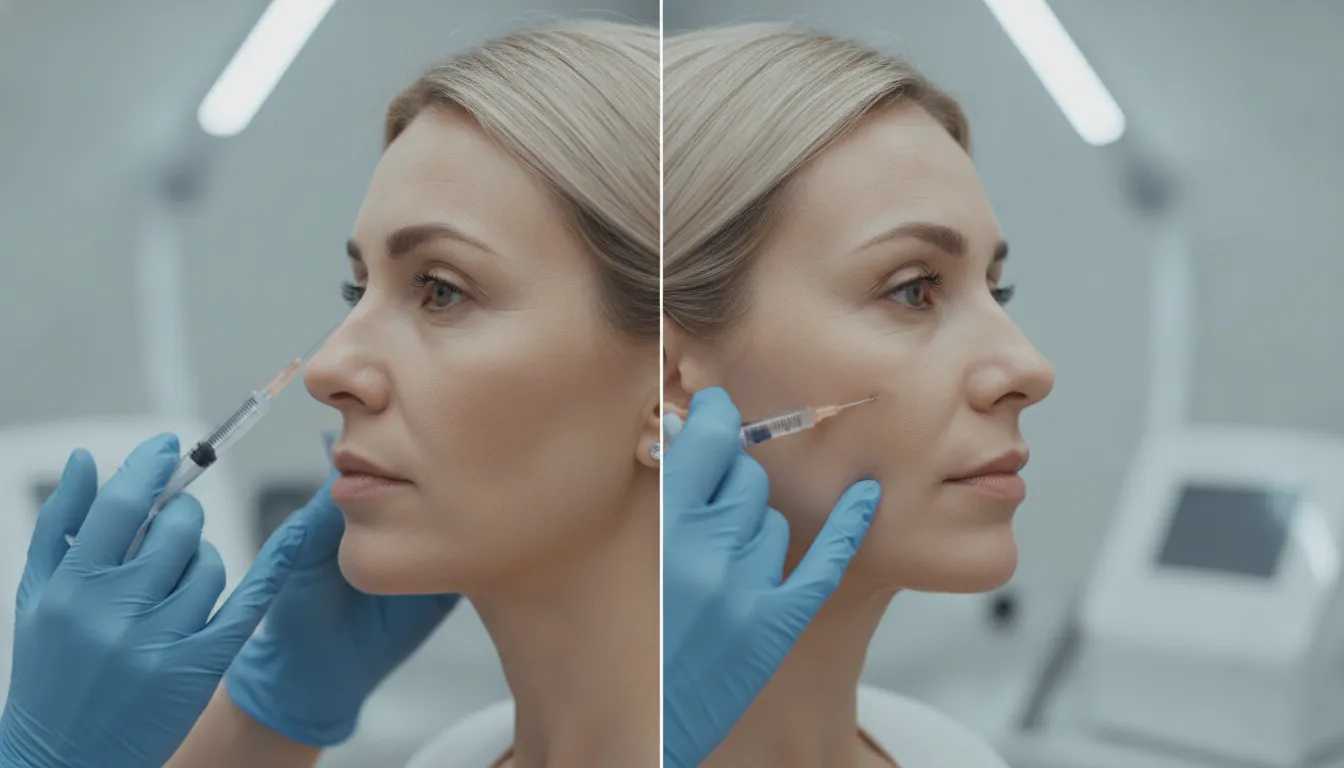
A line that appears when you smile may have a different cause from a crease that stays visible when your face is relaxed. That’s one reason Botox and dermal fillers aren’t interchangeable. Botox temporarily reduces activity in targeted muscles, while fillers add volume beneath the skin. Each treatment has different uses, limitations, and risks, and neither is right for everyone. This guide to Botox injections vs dermal fillers breaks down how the treatments work and the concerns they may address. You’ll also learn what can affect results and cost, plus what to ask a qualified provider before choosing a treatment or deciding to wait.
Key Takeaways
- Match the treatment to your concern: Botox may soften expression-related lines, while fillers may address volume loss or contour changes. A consultation can help clarify which option, if any, fits your goals.
- Plan for temporary results and ongoing costs: Effects, duration, and pricing vary by treatment area, product, and individual response. Ask about maintenance, follow-up visits, and the full cost.
- Choose a qualified provider and ask questions: Share your health history, medications, and past treatments. Discuss realistic outcomes, risks, alternatives, and aftercare before deciding.
What Are Botox Injections, and How Do They Work?
Botox is a brand of botulinum toxin type A, a prescription treatment that temporarily reduces activity in selected muscles. It is commonly used to soften lines that become more noticeable when you make facial expressions. Since it works on muscle movement rather than adding volume, Botox addresses different concerns from dermal fillers. A qualified medical professional can help assess what may be contributing to your lines and whether treatment is appropriate.
How botulinum toxin temporarily limits targeted muscle activity
When you make an expression, nerves send signals that tell nearby muscles to contract. Botox blocks some of those signals at the treatment site, so the targeted muscles move less strongly for a time. The skin above them may crease less during facial movement, which can soften certain expression lines.
The effect is temporary and limited to the treated area. Botox does not fill wrinkles, restore volume, or prevent every facial muscle from moving. A clinician should assess your health history and concerns before recommending treatment. VIVA Skin Clinics explains how Botox affects muscle activity and how this differs from fillers.
Dynamic lines Botox may soften: forehead lines, frown lines, and crow’s feet
Botox is commonly used for dynamic lines, which appear or deepen when you move your face. These include horizontal forehead lines, frown lines between the eyebrows, and crow’s feet at the outer corners of the eyes. By reducing the muscle movement that contributes to these lines, treatment may make them look softer.
Some creases remain visible even when your face is at rest. These may have causes beyond muscle movement, such as changes in the skin or facial volume, so Botox alone may not address them. At a consultation, ask your provider what may be contributing to your specific concerns and which options are suitable. VIVA Skin Clinics lists these common treatment areas.
When results appear, how long they last, and why maintenance may help
Botox results develop gradually rather than appearing immediately. The timing can vary, and your provider can explain when to assess your results. The muscle-relaxing effect commonly lasts about three to four months, although this varies from person to person and by treatment area. As the effect fades, muscle movement gradually returns and expression lines may become more noticeable.
Some people choose repeat treatments to maintain results; others prefer to wait and see how their appearance changes. Your clinician can discuss a suitable schedule based on your response and goals. Follow their advice about when to return, and don’t schedule additional injections sooner than they recommend. VIVA Skin Clinics describes the temporary effects and typical duration of Botox.
How placement and dose shape results and facial expression
The injection sites and amount used influence which muscles are affected and how much movement remains. A treatment plan should take your facial anatomy, concerns, and preferences into account. Many patients want a softer appearance while still being able to express themselves, so discuss what a natural result means to you before treatment.
An appropriately trained medical professional can assess your facial movement and explain what results are realistic. Share your medical history, medications, and any previous cosmetic treatments during the consultation. Small differences in placement can affect the outcome, which is one reason provider experience matters. MaxSurg discusses precise placement when comparing Botox with fillers.
What Are Dermal Fillers, and How Do They Work?
Dermal fillers are injectable treatments that add volume beneath the skin. Depending on the product and where it is placed, a provider may use filler to add fullness to the lips, support cheek contours, or soften certain folds around the mouth. Results vary, and the aim is to choose an approach that suits your features and goals rather than apply the same treatment to everyone.
Many fillers are made with hyaluronic acid, a substance found naturally in the body that helps retain moisture. Other fillers use different materials, and each product has its own approved uses, effects, and potential risks. Some hyaluronic acid fillers can be dissolved by a medical professional, but this does not remove all treatment risks. Ask your provider which product they recommend and why, and whether other options may suit you better. Learn about hyaluronic acid fillers.
Fillers work differently from Botox injections. Botox temporarily limits activity in targeted muscles, while fillers add volume under the skin. A consultation with a qualified medical professional can help clarify which treatment, if any, fits your concerns and health history.
How fillers restore volume, support contours, and soften folds
Some facial areas lose fullness over time, while folds may become more noticeable. A dermal filler adds volume beneath the skin, which can support surrounding tissue and soften the appearance of certain creases. Depending on the product and treatment plan, a provider may also use filler to add fullness to the lips or define areas such as the cheeks and chin.
The effect depends on the type and amount of filler, as well as where it is placed. Fillers do not stop natural facial changes or treat every type of line or skin concern. Your provider can discuss the result you may reasonably expect and whether filler is appropriate for your goals. Read about common uses for dermal fillers.
How hyaluronic acid fillers compare with other types
Hyaluronic acid fillers use a substance that occurs naturally in the body and helps retain moisture. Different formulations have different properties and uses, so a product selected for one facial area may not be suitable for another. Some hyaluronic acid fillers can be dissolved by a medical professional, but treatment still carries risks, and dissolving filler may require an additional procedure.
Other fillers use different materials and can vary in how they work, where they may be used, and how long results last. Ask your provider to name the product they recommend, explain why it suits the treatment area, and discuss alternatives. Understanding the product and its risks can help you make an informed decision. Review how hyaluronic acid fillers are used.
Concerns fillers may address: volume loss and static wrinkles
Fillers may be an option for concerns related to lost volume or lines that remain visible when your face is at rest. These are different from dynamic lines, which form or deepen as you make expressions. Because fillers add volume rather than relax muscles, a provider may consider them for concerns such as reduced cheek fullness or certain folds around the mouth.
A filler may soften a line’s appearance, but it will not erase every wrinkle or address every cause of skin changes. Your provider can assess what may be contributing to the concern and explain whether filler, another approach, or no procedure is suitable. GoodRx explains how fillers may address volume and contour concerns.
Common treatment areas: lips, cheeks, smile lines, marionette lines, and chin
Providers may use fillers to add fullness to the lips, restore volume in the cheeks, or soften certain folds around the mouth. These can include smile lines, which run from the sides of the nose toward the corners of the mouth, and marionette lines, which extend downward from the corners. Some products may also be used to add definition to the chin.
The right product and technique depend on the treatment area, your facial structure, and your goals. Not every filler is appropriate for every area, and injections require knowledge of facial anatomy. Ask your provider which areas they recommend treating, what changes are realistic, and whether a different option may be a better fit. See an overview of common filler treatment areas.
How filler type, treatment area, and personal factors affect results and duration
How long filler results last varies. The product and treatment area matter, as do individual factors such as your facial movement and how your body responds. A provider can give you an estimate based on the specific product and plan they recommend, but no estimate can guarantee how long your results will remain.
Ask when to schedule a follow-up and whether you may want future treatments to maintain the result. Share relevant health information and details about previous cosmetic procedures before treatment. It is also helpful to ask what changes are expected during recovery and when to contact the clinic with a concern. Medical News Today reviews factors that can affect filler duration.
Botox Injections vs. Dermal Fillers: What’s the Difference?
Botox injections and dermal fillers are both injectable treatments, but they work in different ways. Botox temporarily reduces activity in targeted muscles; fillers add volume or support beneath the skin. Understanding what may be causing your concern can help you discuss suitable options with a qualified dermatology provider.
Dynamic lines from muscle movement vs. static lines linked to volume loss
Dynamic lines appear or deepen as facial muscles move when you smile, squint, or frown. They’re often most noticeable during expressions. Botox may soften some of these lines by temporarily relaxing the targeted muscles.
Static lines remain visible when your face is at rest. They can be related to volume loss, changes in skin support, or repeated movement over time. Fillers add volume beneath the skin, which may soften certain folds or restore fullness. As Facial Esthetics explains, Botox targets muscle activity, while filler adds volume or structure. Since several factors can contribute to the same concern, a provider can assess your skin and facial movement before recommending treatment.
Which concerns and facial areas each treatment may address
Botox is commonly used to soften expression-related lines on the forehead, between the eyebrows, and around the outer corners of the eyes. Whether it’s appropriate depends on your concerns, facial anatomy, and the provider’s assessment.
Fillers may add fullness to the cheeks or lips, improve facial contours, and soften some deeper creases around the mouth. Certain products may also be used in areas such as the chin. The right treatment varies by person and by product. MaxSurg’s overview of Botox and fillers outlines their common uses, but an individual assessment is important. Ask your provider which options are suitable for the area you want to treat, along with the benefits and risks for your situation.
Match treatments to goals: soften lines or restore volume
Consider what you’d like to change and when the concern is most noticeable. If a line appears mainly when you frown, raise your eyebrows, or smile, Botox may be worth discussing. If you’re concerned about lost fullness, thinner lips, or folds that remain when your face is relaxed, a filler consultation may be more relevant.
Your desired result matters, too. You might want to soften a specific line while preserving natural expression, or add fullness without changing your overall features. Tell your provider what you hope to achieve and share any previous treatments. They can explain what’s realistic and whether treatment is appropriate. GoodRx’s comparison of Botox and fillers also highlights why the cause of the concern matters: muscle-related lines and volume loss call for different approaches.
What these treatments cannot do—and myths about frozen expressions, permanence, and interchangeability
Botox and fillers aren’t interchangeable. Botox doesn’t replace lost volume, and filler doesn’t relax the muscles that create expression lines. Neither treatment addresses every concern, and some people may decide that one treatment, a combination, or no injectable treatment is right for them.
Botox doesn’t automatically make your face look “frozen.” Placement and dose affect the result, so discuss your preferences with an experienced provider. Botox is temporary, and its effects fade over several months. Fillers are also temporary, though their duration depends on the product and treatment area. As Buddiga explains in its review of Botox myths, these treatments work in distinct ways. Before deciding, ask about expected results, limitations, possible side effects, and how follow-up care may fit into your plan.
How Do Results, Costs, and Risks Compare?
Botox and dermal fillers differ in how quickly results appear, how long they last, how they’re priced, and what risks they carry. The right choice depends on your goals, the area being treated, your health, and the product your provider recommends. Use the points below to compare the treatments and prepare questions for your consultation.
Compare onset, appearance, duration, and maintenance
Botox results develop gradually. You may begin to notice a change within three to seven days, with the full effect often becoming clearer within about two weeks. Results commonly last around three to four months, although this varies. Fillers add volume immediately, but swelling or bruising may affect how the area looks at first. Depending on the product and treatment area, results can last from several months to two years. The Cleveland Clinic’s comparison of Botox and fillers explains how their effects differ. Neither treatment stops aging, and results change over time. Ask your provider what outcome is realistic for you and when a follow-up may be appropriate.
Why providers price Botox by unit and fillers by syringe
Botox is generally priced by the unit, while dermal fillers are usually priced by the syringe. The number of Botox units recommended depends on factors such as the treatment area, muscle activity, and your goals. Filler costs depend on the product and how many syringes are used to add volume or shape. Since people need different amounts, prices can vary even for the same area. Before treatment, ask your provider to name the product and explain the planned quantity and total cost. The American Society for Dermatologic Surgery’s overview of injectable treatments offers background on these procedures and treatment planning.
How treatment area, product, location, and provider expertise affect cost
Your final cost depends on more than whether you choose Botox or fillers. The treatment area, product, amount used, clinic location, and provider’s experience can all affect the price. Filler treatment may require more than one syringe, while Botox dosing varies based on the area and your muscle activity. MU Health Care’s comparison of Botox and fillers discusses typical filler costs and why expenses can vary. Price is one factor to consider, but it shouldn’t be your only one. Ask for an itemized estimate that explains the product, amount, provider fee, and any charges for follow-up visits before you agree to treatment.
Plan for ongoing costs, follow-up visits, and touch-ups
Both treatments are temporary, so maintaining results usually means returning for repeat appointments. Botox commonly needs refreshing every few months, while filler timing depends on the product, placement, and your response. A touch-up may be discussed after treatment, but it isn’t always necessary or recommended. Ask whether follow-up visits are included in the quoted price and how the clinic handles questions or concerns afterward. Planning for the ongoing cost can help you decide whether treatment fits your budget. Your provider can suggest a schedule based on your results and preferences, and explain when another appointment is appropriate. Don’t assume that more frequent treatment will improve your outcome.
Common short-term effects: redness, tenderness, bruising, and swelling
Temporary redness, tenderness, bruising, and swelling can occur after either treatment. These effects are often mild and improve over several days, though the timing varies. Swelling after filler injections may make the treated area look fuller at first than it will once the swelling settles. Follow your provider’s aftercare instructions, and contact the clinic if a symptom is severe, worsening, or not improving as expected. The Cleveland Clinic’s guide to Botox and fillers describes common side effects and how the procedures differ. Before your appointment, ask which reactions to expect and how to reach your provider if you have a concern.
Treatment-specific risks: eyelid drooping with Botox and rare, serious vascular complications with fillers
Botox can sometimes cause temporary eyelid or brow drooping, particularly if the product affects nearby muscles. A rare but serious filler complication occurs when product blocks blood flow in a vessel. This can damage skin and, in rare cases, affect vision. After filler treatment, seek urgent medical care for severe or increasing pain, pale or discolored skin, or any change in vision. The FDA’s information on dermal filler risks describes these complications and the importance of proper training. Ask your provider how they recognize and respond to complications before you proceed.
Reversibility: Botox wears off, but only some fillers can be dissolved
Botox effects fade over time as the treated muscles regain activity. There isn’t an instant way to reverse the effect, so you generally need to wait for it to wear off. Some hyaluronic acid fillers can be dissolved by a qualified professional using an enzyme called hyaluronidase. This option does not apply to every filler, and dissolving a product can carry its own risks. Other filler materials may be difficult or impossible to remove without a procedure. Before treatment, ask which product your provider plans to use and whether it can be dissolved. The FDA’s dermal filler guidance explains that filler materials differ.
How health history, medications, product choice, and injector qualifications affect safety
Tell your provider about your health history, allergies, medications, supplements, and previous cosmetic treatments. Some medicines can increase bruising, and certain health conditions may affect whether a treatment is suitable. Don’t stop a prescribed medication unless the clinician who manages it tells you to. Ask which product will be used, whether it is appropriate for the planned area, and who will perform the injections. A qualified medical professional with relevant training should explain the potential benefits, risks, alternatives, and aftercare, and give you time to decide. The FDA’s patient guidance on dermal fillers recommends discussing your medical history and choosing a licensed provider with relevant experience.
Can You Combine Botox and Fillers, and How Do You Choose?
When treating muscle movement and volume loss may fit your goals
Botox and dermal fillers can be part of the same treatment plan because they address different concerns. Botox temporarily relaxes targeted muscles, which may soften lines that appear with facial movement, such as forehead lines or crow’s feet. Fillers add volume or support facial contours, which may help with concerns such as thinning lips or volume loss in the cheeks.
Whether one treatment or both may suit you depends on your goals, facial anatomy, and health history. A qualified provider can assess whether your concerns relate to muscle movement, volume changes, or both. As GoodRx explains in its comparison of Botox and fillers, the treatments have distinct uses, so one is not a direct substitute for the other.
Why providers may recommend separate or staged treatments
A provider may recommend Botox and filler during the same appointment or suggest spacing them out. There is no single schedule that works for everyone. The choice may depend on the areas being treated, your treatment history, the products planned, and how your provider wants to assess your response.
Staging treatments may make it easier to evaluate results before deciding whether an adjustment or another treatment is appropriate. Botox and fillers also require different knowledge of facial muscles, facial structure, products, and potential complications. Ask why your provider recommends a particular sequence, what to expect between appointments, and whether waiting between treatments could help you assess each result. This overview of differences in injection techniques and expertise can help you prepare for that conversation.
Discuss goals, health history, medications, previous treatments, and alternatives at your consultation
Before treatment, explain what you hope to change and what kind of result you prefer. Share your medical history, allergies, medications and supplements, and details of previous cosmetic treatments, including when and where you received them. Mention any past reactions or complications. This information helps your provider assess whether treatment is appropriate and explain relevant precautions.
Ask about alternatives, including waiting, choosing a different treatment, or having no procedure. Don’t stop a prescribed medication unless the clinician who manages it advises you to. Your provider should make space for questions and explain how your circumstances may affect the plan. Choosing an appropriately trained professional is important for both types of injectable treatment, as MaxSurg explains in its comparison of fillers and Botox.
Ask about expected results, total cost, risks, maintenance, and follow-up
Ask what changes are realistic for your concerns, when results may appear, and how long they may last. Find out about common side effects and less common but serious risks, and ask whom to contact if you have a concern after treatment. If you’re considering fillers, ask which product your provider plans to use and whether it can be dissolved. Only certain types of filler can be dissolved.
Request a full cost estimate before proceeding. Botox is commonly priced by unit, while fillers are often priced by syringe. Your total cost depends on the product, treatment area, and plan. Ask whether follow-up visits or touch-ups are included and how often you may need maintenance. MU Health Care’s comparison of Botox and fillers offers more context on factors that can affect filler costs.
Choose a qualified, appropriately trained provider—and decide whether Botox, fillers, both, or neither suits you
Look for a licensed clinician with appropriate training and experience in the specific treatment you’re considering. Ask who will perform the injections, how often they treat your area of concern, and how they handle complications. You should feel comfortable discussing your goals and asking for clear, straightforward answers. Be cautious if you feel pressured to book or purchase more treatment than you want.
A helpful consultation should give you a clear understanding of your options. Botox, fillers, a combination of both, or no treatment may suit your needs. Your provider can help you weigh potential benefits, risks, costs, and maintenance in light of your health and preferences. Waccamaw Dermatology’s guidance on injectable care also highlights the value of choosing a knowledgeable professional.
Related Articles
- Dermal Fillers St. Petersburg | Dermal Fillers Tampa
- Botox in Clearwater, FL | The Dermaclinique
- Fillers Archives – Priya Nayyar, M.D.
- Botox in St. Petersburg, FL | Dermaclinique
- RHA Fillers in St. Pete, FL | The Dermaclinique
Frequently Asked Questions
Can Botox and dermal fillers be used together?
Yes, a qualified provider may recommend both if you have concerns related to muscle movement and volume loss. They can be used in one appointment or at separate visits, depending on your treatment plan. Ask why a particular approach suits your goals and whether spacing treatments would help you assess the results.
How do I know whether Botox or filler may suit my concern?
Notice when the line or change is most visible. Lines that deepen with expressions may be worth discussing as a Botox concern, while reduced fullness or folds that remain when your face is relaxed may prompt a conversation about filler. A provider can assess the area and explain your options.
How long do Botox and filler results last?
Botox commonly lasts about three to four months. Filler results vary by product and treatment area, and may last from several months to two years. These are general estimates, not guarantees. Your provider can give you a more relevant timeframe based on the product and plan.
Are Botox injections and dermal fillers safe?
Both treatments can cause temporary effects such as bruising, redness, tenderness, or swelling. Rare complications can be serious, particularly if filler blocks blood flow. Choose a licensed, appropriately trained medical professional, share your health history and medications, and ask how the clinic handles complications.
What should I ask before booking injectable treatment?
Ask which product the provider plans to use, what results are realistic, what risks apply to you, and what the full cost includes. Also ask about aftercare, follow-up, and maintenance. Take time to consider your options, including waiting or choosing no treatment.