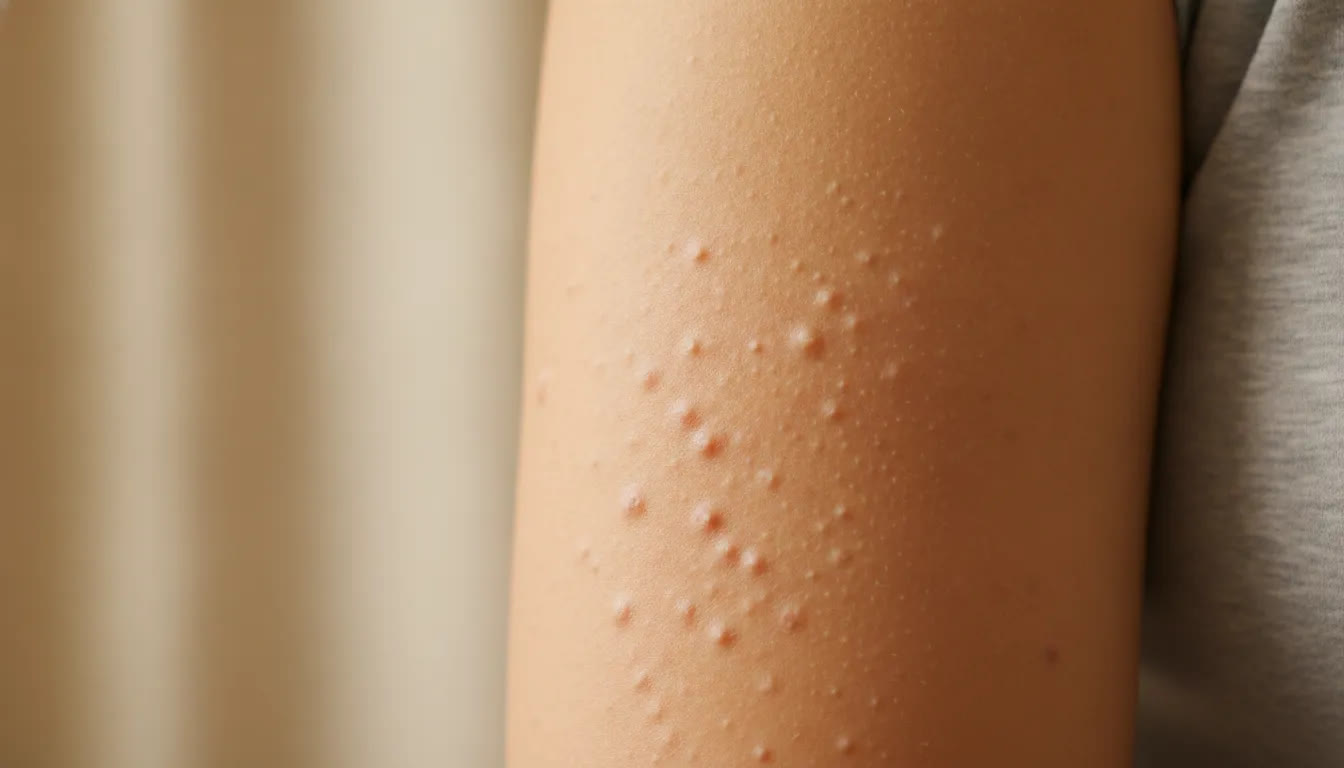
Those tiny, rough bumps on the outer arms or thighs can feel more noticeable after a hot shower or during dry winter weather. They are often keratosis pilaris, a common and harmless condition caused by keratin and dead skin cells plugging hair follicles. This is not a sun-damage spot, and it is not what skin cancer treatment is for. The result is skin that may look like goosebumps and feel dry, though similar-looking changes can have other causes.
Keratosis pilaris usually cannot be cured permanently. Gentle exfoliation, a urea or lactic acid moisturizer, and consistent care can soften the bumps and make the texture less obvious. Improvement is gradual, and a dermatologist can help if the bumps are itchy, widespread, sudden, or do not improve after four to six weeks.
Learning what the bumps look and feel like is the first step toward choosing reasonable care and recognizing when an evaluation makes sense.
Schedule a skin exam if the bumps are new, itchy, or not improving with gentle care.
What Keratosis Pilaris Looks Like
Keratosis pilaris usually appears as many small, rough bumps around hair follicles. The plugs are made of keratin, a protein in the outer layer of skin, along with dead skin cells. As these plugs collect in the follicles, the surface can feel dry or sandpapery and may resemble persistent goosebumps. It is also commonly called “chicken skin.”
The bumps may be skin-colored, red, or brown, depending on your natural skin tone and how much irritation is present. They are generally similar in size and are not typically filled with pus. Some people notice mild itching or dryness, while others mainly notice an uneven texture when they run a hand over the skin. The bumps may stand out more when the skin is dry.
The American Academy of Dermatology describes the outer upper arms and thighs as the most common areas. In children, keratosis pilaris may also appear on the cheeks. Less commonly, it can affect the buttocks, forearms, or trunk.
- Outer upper arms: Small bumps may cover part of the upper arm or extend toward the elbow.
- Thighs: The texture may be easiest to feel on the outer thighs.
- Cheeks in children: The bumps can look like a fine, rough rash on the face.
- Other areas: The buttocks, forearms, or trunk can be affected less often.
Keratosis pilaris is a harmless, noncontagious skin condition, so it does not spread from person to person. Its follicle-centered bumps can look different from the inflamed pimples associated with acne, and they are not the same as an eczema rash. Skin can have more than one condition at the same time, however, and dry or itchy bumps are not enough to identify the cause on their own. See a dermatologist if a spot is painful, produces pus, changes quickly, or bleeds. The same is true when it does not look like the usual small, even bumps.
Why the bumps come and go
The same skin can look almost smooth in August and rough again in January. Dry air lets the plug sit on the surface, so winter, indoor heat, and long hot showers make keratosis pilaris easier to see. Many people also notice it after frequent swimming, because pool water strips the light oils that keep the follicle soft. Summer humidity often softens the texture without any new product.
That swing is a clue, not a cure. If the bumps fade in humid months and return when the heat comes on, you are probably looking at keratosis pilaris rather than a rash that spreads. Keep the moisturizer going in the easy months. Restarting from scratch every winter is what makes the four-to-six-week wait feel endless.
Why the Small Bumps Form
Keratosis pilaris begins in a hair follicle. In this context, a pore is the opening of a hair follicle, the structure each body hair grows from. Normally, old skin cells shed from the follicle lining. With keratosis pilaris, keratin, a natural protein in skin, and dead skin cells collect instead. The resulting plug makes the follicle feel rough and creates a small bump that may be skin-colored, red, or brown.
Who is more likely to develop it?
Keratosis pilaris can affect people of any age or skin tone. But it often starts in childhood or during the teen years and may become more noticeable around puberty. It frequently softens by the mid-20s, although it can persist into adulthood. A family history is common. The Primary Care Dermatology Society reports that 30 to 50 percent of cases have a genetic origin, often with an autosomal dominant pattern. Clinical guidance from the PCDS also describes keratosis pilaris as a condition that commonly begins in childhood and adolescence.
The condition is more likely in people with dry skin, eczema, asthma, hay fever, higher body weight, or ichthyosis vulgaris, a condition that causes persistently dry, scaly skin. These associations do not mean keratosis pilaris causes any of those conditions. Dry skin and keratosis pilaris can coexist, and someone may also need eczema care, but the rashes are different: keratosis pilaris is a follicular plug rather than eczema.
Keratosis pilaris is not contagious and is not an infection. It does not spread through contact. It is also not acne, an autoimmune disease, or an allergy. The small, fairly uniform bumps result from the way the upper hair follicle forms and sheds keratin. They are usually not pus-filled pimples. Weather and routine can make the texture more noticeable: dry air, winter, frequent swimming, and long, hot showers may worsen it, while many people notice improvement in summer. Rarely, a similar follicular pattern can occur during treatment with the melanoma medicine vemurafenib, which is one medication-related change a clinician may consider in the right setting.
Because several skin conditions can look similar, a dermatologist can help confirm the diagnosis when bumps appear suddenly, become very inflamed, or do not fit the usual pattern. A skin examination is generally enough to distinguish keratosis pilaris from acne, eczema, or another rash.
Keratosis Pilaris or Something Else
Keratosis pilaris is easy to mix up with acne or eczema because all three can leave the skin rough. The pattern is different once you look closely. Keratosis pilaris bumps are small, similar in size, and centered on hair follicles. They are usually not pus-filled, and they favor the outer upper arms and thighs.
Acne is an inflammatory condition. It tends to bring blackheads, whiteheads, tender pimples, or deeper cysts, most often on the face, chest, and back. A true pimple can hurt. A keratosis pilaris bump usually does not. If the spots on your face are inflamed rather than a field of tiny rough dots, acne care is a separate question from the plan on this page.
Eczema looks like inflamed, cracked, very itchy, or blistered patches. It often favors skin folds and the hands. Keratosis pilaris can sit beside eczema, and dry skin can make both worse, but the follicular plug is not the eczema rash. Treating one does not automatically clear the other.
| Feature | Keratosis pilaris | Acne | Eczema |
|---|---|---|---|
| Typical look. | Small, similar follicular bumps. | Blackheads, whiteheads, tender pimples, or cysts. | Inflamed, cracked, or blistered patches. |
| Common sites. | Outer upper arms and thighs. | Face, chest, and back. | Folds, hands, and other dry patches. |
| Itch or pain. | Often none, or a mild itch. | Inflamed spots can be sore. | Often very itchy. |
| Spreads to others. | No. | No. | No. |
| First useful step. | Gentle care for the keratin plug | Its own acne plan | Its own eczema plan |
Two other names get confused with this one because they share the word keratosis. Actinic keratosis is a scaly spot on sun-damaged skin. A dermatologist checks it because it can change over time, which is why skin cancer treatment is a separate visit from keratosis pilaris care. Seborrheic keratosis is a stuck-on growth. Neither is keratosis pilaris, and neither is covered here. If a spot bleeds, grows quickly, or looks different from the rest, it needs an exam rather than a home routine.
Home Care That Can Soften the Bumps
There is no cure for keratosis pilaris. Care is about softer plugs, less dryness, less itch, and a texture that is less obvious. The American Academy of Dermatology says to judge a plan after four to six weeks. Many people then need a lighter maintenance routine, because the plugs tend to return if the skin dries out again.
The American Academy of Dermatology self-care steps are simple. They work better as a sequence than as a single product.
- Keep baths and showers short, and use warm water rather than hot water.
- Exfoliate gently with a loofah or a washcloth. Skip gritty scrubs and hard rubbing, which inflame the follicle.
- If you use a keratolytic, follow the label. More is not faster, and overuse leaves the skin raw.
- Within about five minutes of bathing, while the skin is still damp, apply a bland moisturizer.
- Once the texture is calmer, keep the same habits a few times a week instead of stopping entirely.
Moisturizers with urea or lactic acid are the ones dermatologists most often name for these bumps. While the skin is rough, apply them after bathing and again later in the day, up to two or three times daily. A plain ointment or an oil-free cream is fine on days when acids feel like too much.
Products that need a lighter hand
A dermatologist may also suggest glycolic acid, salicylic acid, or a topical retinoid. These loosen the plug, and they can irritate. Stop and ask for help if the skin burns, cracks, or turns very red. Do not start a steroid cream on your own. A clinician sometimes uses a mild steroid for a few days when redness is marked, but regular steroid use can thin the skin.
A few habits make the bumps look worse. Self-tanner settles into the plugs and outlines them. Long hot showers strip the moisture you just tried to add. Picking or squeezing can inflame the follicle and leave a mark. In dry indoor air, a humidifier helps. Shaving and waxing can irritate follicular bumps, so keep the blade sharp and the skin protected, or ask about other hair-removal options at a visit.
A week of care without overdoing it
A useful week is boring on purpose. On shower days, wash with a mild cleanser, use the washcloth in slow circles, pat dry, and moisturize while the skin is damp. On the other days, moisturize once more if the arms feel tight. Use a leave-on acid only as often as the label or your dermatologist allows, and skip it on any day the skin stings.
Children’s cheeks need a softer version of the same plan. A bland moisturizer is enough for most face bumps. Acids and scrubs that are tolerable on the upper arm can burn facial skin. If a child is bothered by the look or the itch, a pediatric dermatology visit is a better next step than a stronger cream from the drugstore.
Give the routine four to six weeks before you decide it failed. Take a photo in the same light at the start and again at week six. The change is usually a smoother feel and less redness, not a blank arm. If nothing moved, that is useful information to bring to the exam.
When Home Care Is Not Enough
Keratosis pilaris is diagnosed with a skin exam. A biopsy is rarely needed, and it is reserved for a pattern that does not look typical. You do not need a visit for every patch of rough skin. You do need one when home care is not answering the question you actually have.
Book an exam if four to six weeks of gentle care has not helped. The same is true when the bumps are very itchy, cover a large area, show up on the face, or appear suddenly in an adult. Come in if you cannot tell these dots from acne or eczema. Pain, pus, bleeding, a spot that changes quickly, or a sore that does not heal are not typical keratosis pilaris features. Those need a look, not another lotion.
What a visit can change
After the exam, a dermatologist may prescribe an exfoliant or a topical retinoid and show you how often to use it. Marked redness sometimes gets a short course of a topical steroid, with a stop date. If moisturizers and medicines are not enough, laser or light treatment is sometimes used to fade redness. The American Academy of Dermatology notes that this step comes after topical care, not before it. None of these options is a promise of clear skin. The goal is a calmer texture and a plan you can keep up.
Chemical peels for skin texture are a separate cosmetic service. A peel can smooth rough or uneven skin for the right person, but it is not the first step for keratosis pilaris and it is not a cure. Whether a peel, a prescription cream, or simple maintenance fits you is a decision made at the visit.
Dermaclinique offers medical dermatology at its St. Petersburg and Clearwater offices. Call (727) 888-0900 to schedule an exam. The clinician who sees your skin can tell you whether the bumps are keratosis pilaris and which care is worth your time.
What to bring to the exam
Bring the products you have already tried, including the moisturizer and any acid or retinoid. A short list is enough: the name, how often you used it, and whether it stung. Mention asthma, hay fever, eczema, and any family members with the same bumps. Those details help the dermatologist separate keratosis pilaris from a lookalike without extra tests.
Say what you want from care. Some people want less itch. Others want the arms to look smoother under a short sleeve. The plan is different for those two goals, and neither one requires a procedure on the first day. If a laser or a peel is even a fit, it comes after the skin barrier is calm and the diagnosis is clear.
St. Petersburg patients can be seen at 3085 Dr. MLK Jr. St. N. Clearwater patients can be seen at 510 E. Druid Road, Suite A. Both offices use the same phone, (727) 888-0900, and weekday hours are 8:30 a.m. to 5 p.m. You can also book a visit online. A published service menu does not mean every treatment is offered for keratosis pilaris or at both offices. The exam decides that.
Call (727) 888-0900 to book a keratosis pilaris visit in St. Petersburg or Clearwater.
Frequently Asked Questions
Is keratosis pilaris a form of eczema?
No. Keratosis pilaris is a plug of keratin in the hair follicle. Eczema is inflamed, cracked, or very itchy skin, and the two can show up in the same person. Dryness makes both look worse, but clearing one does not automatically clear the other. A dermatologist can tell them apart on exam.
Is keratosis pilaris an autoimmune disease?
No. It is a common, harmless pattern of how the upper hair follicle sheds skin cells. It is not an infection, and you cannot catch it from someone else. A family history is common, which is why several people in one household may have the same rough bumps.
What does keratosis pilaris on the face look like?
On the face it is most often seen on the cheeks of children. The bumps are small, close together, and rough, and they may look pink, skin-colored, or brown. Facial skin is thinner than the upper arm, so scrubs and strong acids are more likely to irritate it. Face bumps deserve an exam before you start a leave-on acid.
Can keratosis pilaris go away?
It often softens with age, and many people notice it less by their mid-20s. It can also persist in adults. There is no permanent cure. Consistent moisturizing and gentle exfoliation can make the texture less obvious, and the bumps may return if the routine stops, especially in winter.
What should I do about itchy bumps on my arms and legs?
Start with short warm showers, a gentle washcloth, and a moisturizer with urea or lactic acid on damp skin. Give that routine four to six weeks. Schedule a skin exam if the itch is intense or the bumps are new in adulthood. Do the same if you see pus or pain. Do the same if you are not sure this is keratosis pilaris.
Schedule a Keratosis Pilaris Evaluation
Persistent bumps deserve a clear answer. An exam can confirm whether they are keratosis pilaris and set a care plan for your skin. Schedule a dermatology exam at Dermaclinique in St. Petersburg or Clearwater.