
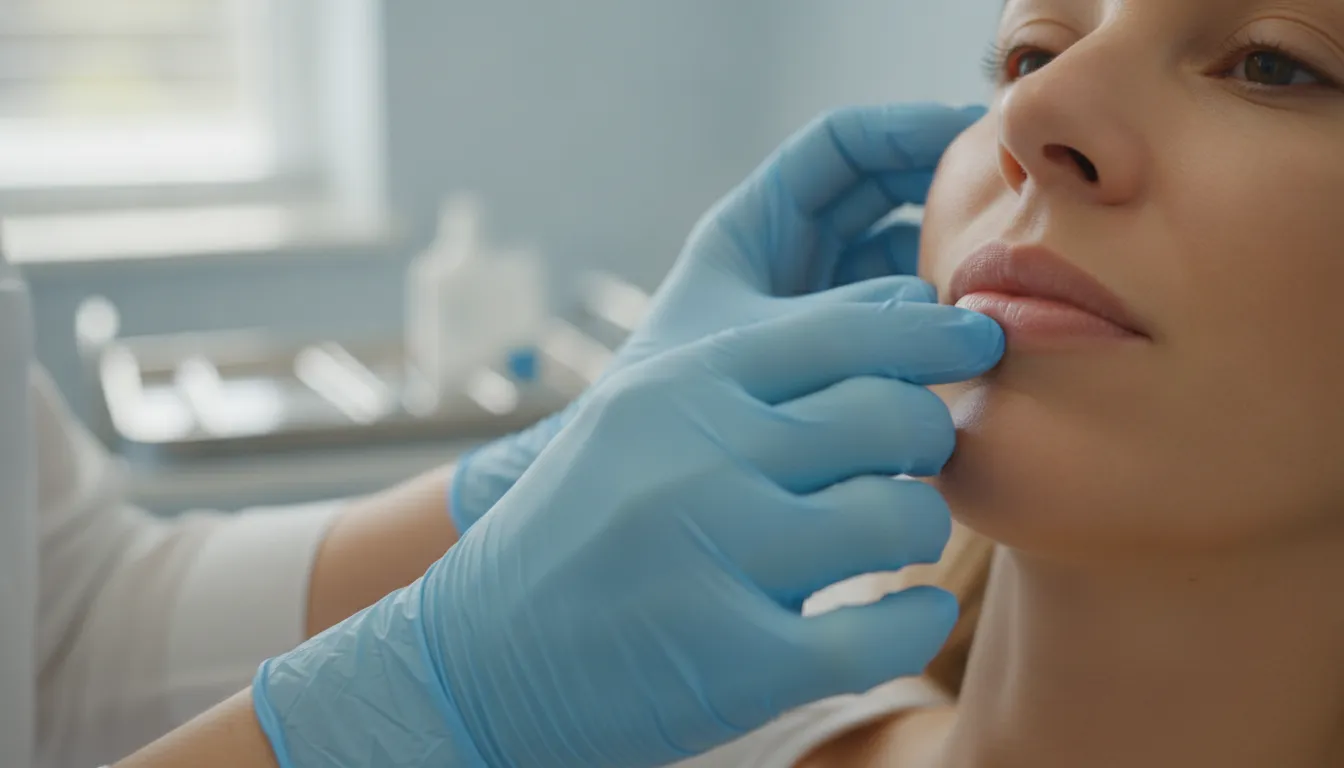
Fordyce spots are small oil glands that sit close to the surface on the lips, inside the cheeks, or on genital skin. They are pale yellow, white, or skin-colored, usually 1 to 3 millimeters, and they do not spread from person to person. Most adults have them. They become easier to see after puberty, and they do not need treatment unless the look bothers you. A dermatologist should still confirm the diagnosis before anyone talks about removal.
Schedule a skin check in St. Petersburg or Clearwater
Dermaclinique is a dermatology practice with offices in St. Petersburg and Clearwater. A visit is for a diagnosis first. Cosmetic removal, if it is even a fit, comes only after that exam. A changing sore is a different problem. The skin cancer treatment page is for lesions that need cancer care, not for a stable yellow cluster of oil glands.
What Fordyce Spots Look Like
These bumps are sebaceous glands without a hair growing out of them. On the lips and inside the mouth, dermatologists call that an ectopic gland: an oil gland in a place where hair does not grow. DermNet describes Fordyce spots as common, harmless, and not sexually transmitted. Cleveland Clinic puts the same finding in plain terms: enlarged oil glands that occur naturally, often around the mouth and sometimes on genital skin.
A typical spot is a tiny dome. Stretch the lip or the skin and the yellow color often shows more clearly. Spots may sit alone or in a cluster along the lip border, the inner cheek, the penile shaft, the scrotum, or the labia. The areola can show related visible glands, called Montgomery glands. None of these patterns means the glands are new growths. They were there; hormones after puberty make them easier to see.
They should not hurt, itch, blister, or drain. A rare penile cluster can feel irritated during sex, and that is a reason for an exam, not a reason to treat the skin at home. Squeezing them does not empty a plug. It breaks the surface and can leave a scar.
Why Fordyce Spots Show Up
There is no infection behind them and no product you forgot to use. Sebaceous glands make oil that protects skin. On the face, those glands usually sit beside a hair. On the lips, inner cheeks, and genital mucosa, the same type of gland can sit at the surface with no hair at all.
People often notice them in the teen years or in early adulthood, when oil glands become more active. DermNet states that Fordyce spots are present in 80 percent of adults. That figure describes how often the glands are visible, not a promise that every person has a noticeable cluster. Cleveland Clinic describes a similar range, about 70 to 80 percent of adults, and calls the finding benign.
The glands do not come from poor hygiene, and scrubbing will not move them deeper. They also do not fill like a pimple, so there is nothing to extract. What changes from person to person is how many glands sit near the surface and how yellow they look in bright light.
Stress does not create the glands. Neither does HPV. A stressful week can make you study your skin more closely, which is often why the spots seem new. If a bump appeared in a day or two, changed color, or started to hurt, that history does not match a lifelong oil gland. That is a different problem, and it belongs in the exam room.
Fordyce Spots vs Look-Alike Bumps
The useful question is not how to erase every pale bump. It is which bump is a normal gland and which one is something else. The conditions below can share a color or a size. They do not share a cause, and they should not share a treatment.
| Finding | What it is | Usual clues | What to do |
|---|---|---|---|
| Fordyce spots | Visible oil glands with no hair. | Yellow-white bumps on lips, inner cheeks, or genital skin. They are painless and clearer when the skin is stretched. | Leave them if the exam confirms them. Discuss removal only for appearance. |
| Milia | Tiny cysts of trapped skin protein. | Firm white dots, often on the eyelids or cheeks. They are not on wet mucosa. | This needs a separate visit. Do not pick at them. |
| Sebaceous hyperplasia | Enlarged oil glands on facial skin that does grow hair. | Yellow facial bumps, often with a central dell. They are more common with age. | This is a different treatment conversation. |
| Herpes or warts | Viral infections. | Grouped blisters, ulcers, or rough growths. They may burn or itch. | Get an exam before any cream or procedure. |
| Skin cancer | Abnormal skin growth. | A spot that grows, bleeds, crusts, or looks different from its neighbors. | Book a prompt dermatology visit. |
Milia are keratin trapped under the surface. Fordyce spots are oil glands. Sebaceous hyperplasia is also an oil-gland change, but it shows on hair-bearing facial skin and often has a small central depression. Genital warts and molluscum are viral. Fordyce spots are not. A dermatologist can usually tell these apart by looking, sometimes with a dermatoscope. A biopsy is uncommon when the pattern is classic.
Use that contrast as a label check, not as a diagnosis for every lip bump. A stable yellow cluster that has looked the same for years is not the pattern of a changing cancer. A sore that will not heal still needs a look.
When Fordyce Spots Need an Exam
Most confirmed spots need no medicine. Book a visit when you are not sure, or when the skin is not behaving like a normal gland. The goal of that visit is a name for the bump, not a procedure.
- The bump is new, growing, bleeding, crusting, or painful.
- Genital bumps appeared after a new partner, or they itch, burn, or ulcerate.
- You cannot tell them from milia, warts, or a sore that has not healed.
- You want them less visible and you are considering any removal method.
- A prior treatment left a scar, a color change, or a bump that looks different now.
Bring a short history: when you first noticed them, whether they have ever changed, and what you have already put on the skin. Photos from last month help only if the light and the stretch of the skin match. Do not start a steroid, an acne cream, or an online “spot remover” while you wait. Those products can irritate thin lip skin and make the next exam harder.
Medical dermatology at the practice is built for this kind of question. The visit is an exam of the spot in context, including nearby skin, not a package that assumes removal.
Care Before Anyone Talks About Removal
If the exam confirms Fordyce spots, the default plan is to leave them. They are a normal variant. No cream makes the glands disappear for good, and home extraction is how people trade a barely visible gland for a scar.
Day-to-day care is ordinary. Use a mild cleanser, lukewarm water, and a plain moisturizer on dry lips. Skip scrubs, alcohol-heavy astringents, and picking. Those steps do not treat the gland. They inflame the surface around it. Makeup or a tinted balm can soften the color for the day if the lip border bothers you. That is camouflage, not a cure.
Lip balm is fine for dryness. It will not shrink a gland. If a balm stings or the lip border turns red only where you apply it, stop that product and mention it at the visit. Irritation can hide the pattern the clinician needs to see.
People search for a Fordyce spots cream because they want something simple. A prescription retinoid is sometimes discussed for appearance, and results vary. It is not a drugstore fix, and it is not right for every site, especially thin genital skin or the wet inner lip. A clinician has to choose the product, the site, and the stop rules. If the skin stings, cracks, or darkens, stop and call rather than pushing through.
Fordyce Spots Treatment After a Diagnosis
Treatment is optional and cosmetic. It is considered when the spots bother you and a dermatologist has already ruled out infection and skin cancer. Published options include topical retinoids, electrodessication or hyfrecation, carbon dioxide laser, cryotherapy, and micro-punch excision. None of these is a first step at home, and none is guaranteed to clear every gland without a mark.
Electrodessication uses a fine electric current to shrink the visible gland. Laser treatment targets the gland with heat. Micro-punch surgery removes a tiny core of tissue. Healing can take days to a few weeks, depending on the method and the site. Lips and genital skin scar more noticeably than a thicker area of the face, so “smaller” is not the same as “risk-free.”
Dermaclinique offers CO2 laser resurfacing for wrinkles, sun spots, and acne scars. That page is about facial resurfacing, not a menu for Fordyce spots. A laser used for oil glands, if a physician offers it after an exam, is a different conversation: a smaller target, a different recovery, and a result that still varies. Do not book a resurfacing package to treat a lip finding you have not had diagnosed.
Ask these questions before you agree to any Fordyce spots treatment:
- What else could this be, and why is removal optional?
- Which method fits this site, and what scar or color change is realistic?
- How many sessions are typical, and what does healing look like?
- What should you avoid on the skin while it heals?
Price depends on the site, the method, and how many glands are treated. The practice does not publish a Fordyce fee. A quote belongs in the visit, after the diagnosis, not in a blog post.
What a Visit at Dermaclinique Covers
Dr. Priya Nayyar is a board-certified dermatologist who leads care at the practice. You can be seen at the St. Petersburg office at 3085 Dr. MLK Jr. St. N, or at the Clearwater office at 510 E. Druid Road, Suite A. Both addresses are the ones published on the contact page. Both offices share the phone number (727) 888-0900 and are open Monday through Friday, 8:30 a.m. to 5:00 p.m.
For a stable, painless cluster, expect a look at the skin and a plain-language answer. If the pattern is not typical, the clinician may suggest a closer exam or, rarely, a small biopsy. Treatment is offered only if you want the spots less visible and the site is a reasonable place to treat. Other skin conditions seen at the practice, including rashes and rosacea, stay on their own pages. This visit is about naming these glands and deciding whether to leave them alone.
Call (727) 888-0900 to book a dermatology visit
Frequently Asked Questions
Are Fordyce spots an STD?
No. They are visible oil glands, not herpes, HPV, or any other infection. They are not passed by kissing or sex. Genital bumps that burn, blister, or showed up suddenly still deserve an exam, because those clues point away from Fordyce spots.
Can you make Fordyce spots go away at home?
No home method removes the gland safely. Toothpaste, lemon, scrubs, and squeezing irritate the skin and can scar it. A dermatologist can confirm what they are. If you still want them less visible, the options are prescription or in-office care, not a bathroom treatment.
Do Fordyce spots on the lips mean skin cancer?
A long-standing yellow cluster that does not change is not the usual look of skin cancer. Cancer is more likely when a spot grows, bleeds, crusts, or fails to heal. That is why a changing lip sore should be examined, while a stable Fordyce pattern often needs nothing but a diagnosis.
Will treatment leave a mark?
It can. Lips and genital skin are thin, and any destruction or excision can change color or leave a small scar. Many people decide the spots bother them less than that risk. If you do treat them, ask how that site usually heals before you start.
When should a child or teen be checked?
Visible glands often appear around puberty and can be left alone once a clinician recognizes them. Bring a child or teen in if the bumps hurt, spread quickly, look like blisters, or worry you because they do not match the pale, stable pattern described here.