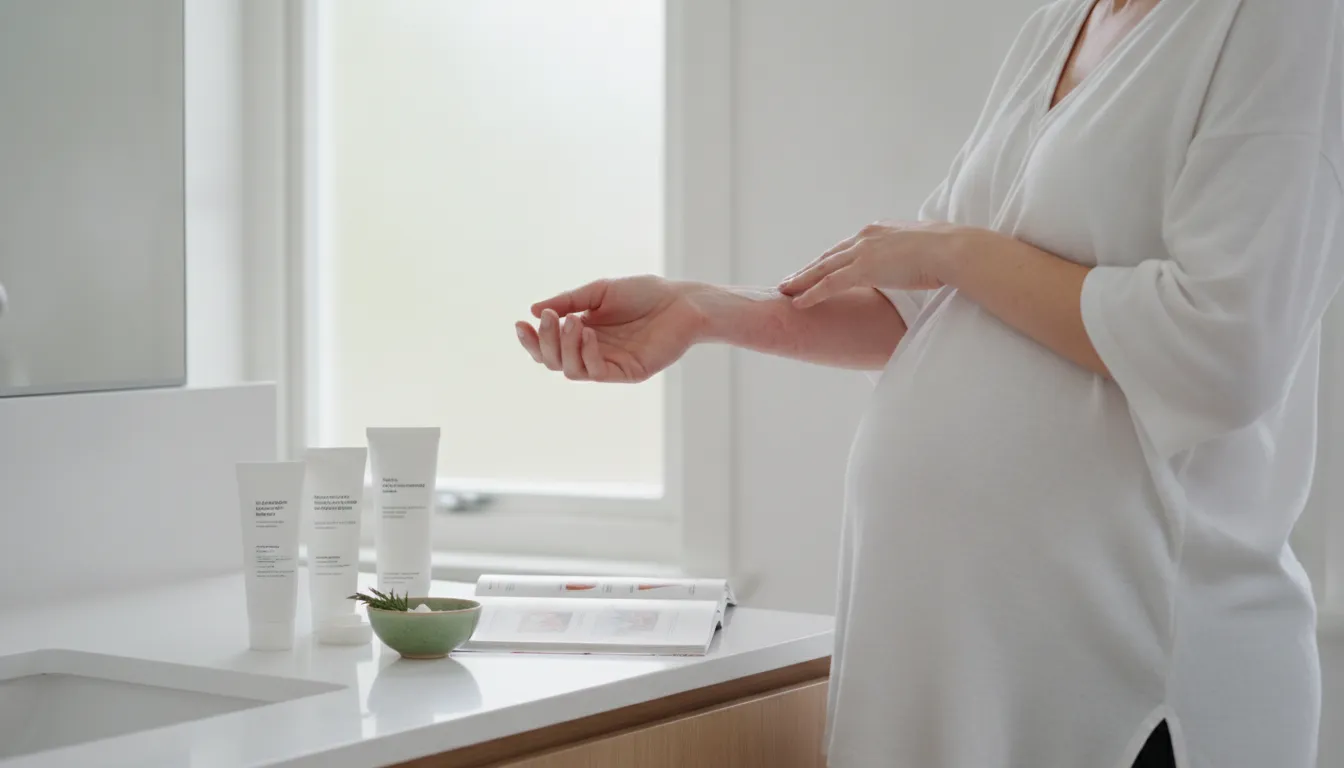
A new rash during pregnancy may look or feel like eczema, but not every itchy patch has the same cause. Even if you’ve had eczema before, a change in its appearance or severity deserves attention, particularly if the rash spreads, disrupts sleep, or becomes painful. A healthcare professional can assess your symptoms and recommend care that fits your needs. This guide explores what pregnancy may mean for eczema, common flare triggers, and ways to care for sensitive skin. You’ll also learn how to discuss eczema treatment during pregnancy with your dermatologist and obstetrician, including what to review before using a medicine or supplement.
Key Takeaways
- Expect eczema symptoms to vary: Pregnancy may ease or aggravate flares, and a new rash deserves assessment by your healthcare provider.
- Choose skin-friendly daily habits: Use gentle, fragrance-free products, bathe briefly in lukewarm water, moisturize regularly, and track what seems to irritate your skin.
- Make treatment decisions with your care team: Review medicines and skin products with your dermatologist and obstetrician, and seek prompt advice if symptoms worsen or infection signs appear.
What Is Eczema, and How Can Pregnancy Affect It?
Eczema is a group of conditions that cause dry, itchy, inflamed skin. Atopic dermatitis is the most common type and can cause ongoing symptoms with occasional flares. Pregnancy may change your skin’s sensitivity and moisture, but its effect on eczema varies from person to person.
Recognize symptoms and changing flare patterns
An eczema flare can cause itchy, dry patches that may look red, darker, or rough, depending on your skin tone. The skin may also crack, feel tender, or become scaly. Pregnancy-related hormonal changes can affect the skin, and some people find their eczema improves while others notice more frequent or intense flares. Eczema can also appear for the first time during pregnancy, and symptoms may change again after delivery. There’s no single pattern to expect. MotherToBaby outlines common eczema symptoms, while the Eczema Foundation explains how symptoms can vary during pregnancy.
Get new or changing rashes assessed
An itchy rash during pregnancy isn’t always eczema. Contact your healthcare provider if you develop a new rash, your usual symptoms change, or the rash spreads or disrupts your sleep. A clinician can assess what’s causing it and recommend care that’s appropriate for your pregnancy. If you have eczema or are planning a pregnancy, discuss your treatment with a dermatologist and obstetrician. The American Academy of Dermatology advises people with eczema to review treatment with a dermatologist during pregnancy. Before your appointment, make a list of the products you use, including prescriptions, over-the-counter creams, and supplements, so your care team can review them with you.
What Can Trigger Eczema Flares During Pregnancy?
Pregnancy can change how your skin feels and responds to everyday conditions. Dryness, irritants, stress, and hormonal shifts may contribute to eczema flares, but triggers vary from person to person. Paying attention to when symptoms appear can help you spot patterns and discuss them with your dermatologist.
Watch for heat, sweat, dry air, and irritating products
Heat and sweat can make skin feel itchy or irritated, while dry air may leave it feeling tight. Fragranced products, harsh cleansers, and rough washcloths can also aggravate sensitive skin. The MotherToBaby guide to eczema identifies dry skin, environmental irritants, allergens, stress, and hormone changes as possible triggers.
Notice whether symptoms follow a hot shower, exercise, or time in a dry room. Try cool or lukewarm water, and choose gentle, fragrance-free products. The Eczema Foundation’s advice for pregnancy recommends gentle bathing habits, including avoiding heavily fragranced soaps and rough washcloths. If a product seems to worsen your symptoms, stop using it and ask your care team about alternatives.
Notice stress, fabrics, and personal triggers
Stress may affect eczema symptoms, and pregnancy can bring changes to sleep, routines, and emotional well-being. Clothing can also contribute to irritation: scratchy seams or fabrics that hold heat may rub against sensitive skin. Hormonal changes during pregnancy can affect skin moisture and sensitivity, so familiar triggers may feel different than they did before. The American Academy of Dermatology notes that eczema can affect emotional well-being.
Keep a simple note of when itching or rashes appear, along with products, clothing, weather, and activities. This may help you identify personal patterns without trying to avoid every possible trigger. Share your observations with your dermatologist or obstetrician, especially if symptoms persist or worsen.
How Can Gentle Skincare Help Manage Eczema?
A gentle skincare routine can reduce avoidable irritation and help protect the skin barrier during pregnancy. These habits may ease discomfort, but they may not prevent every flare or replace treatment recommended by your clinician. Adjust your routine if a product stings or seems to worsen your symptoms.
Choose fragrance-free cleansers and skip scrubs
Choose a mild, fragrance-free cleanser. Fragrance and harsh soaps can irritate sensitive skin, so check product labels carefully. Wash gently with your hands rather than using a loofah, rough washcloth, or exfoliating scrub, which can aggravate already irritated areas.
You may not need to use cleanser over your whole body each time you bathe. If your skin feels tight or uncomfortable after washing, try a gentler product and ask your dermatologist for guidance. The American Academy of Dermatology’s advice for managing eczema during pregnancy includes gentle skin care and regular moisturizing.
Take short, lukewarm baths or showers and pat skin dry
Hot water and long showers or baths can leave skin drier. Keep bathing brief and use lukewarm water. The Eczema Foundation’s pregnancy skincare guidance recommends short showers and a soap-free cleanser, such as a cleansing oil. Choose a product that feels comfortable and does not leave your skin tight or irritated.
After bathing, gently pat your skin with a clean, soft towel instead of rubbing. Leave it slightly damp, then apply moisturizer soon afterward to help seal in moisture. If bathing seems to worsen your itching, ask your care team whether you should adjust your routine.
Moisturize damp skin and reapply often
Apply a fragrance-free cream or ointment soon after bathing, while your skin is still damp. Thicker products, including ointments and ceramide-based creams, can help protect the skin barrier. If you’re unsure which product is right for you during pregnancy, ask your dermatologist or obstetrician.
Reapply moisturizer when your skin feels dry, and continue using it when your eczema looks calmer. Regular use can help keep skin comfortable between flares. The American Academy of Dermatology recommends frequent use of fragrance-free moisturizers for people managing eczema during pregnancy. Stop using a product if it causes a new rash or persistent stinging, and check with your clinician.
Wear soft, breathable fabrics and stay cool
Choose loose-fitting clothes made from soft, breathable fabrics, such as cotton. Rough seams, tight waistbands, and scratchy materials may rub against irritated skin. Wash new clothes before wearing them. If your laundry detergent seems to trigger itching, consider switching to a fragrance-free option.
Heat and sweat can aggravate eczema for some people. Wear light layers, change out of damp clothing, and keep your sleeping space comfortably cool. You can also try storing moisturizer in the refrigerator for a cooler application. Triggers vary, so notice which fabrics, temperatures, or products seem to affect your skin and share that information with your care team.
Which Eczema Treatments Can You Use During Pregnancy?
Pregnancy does not mean you have to manage eczema without help. Some treatments may be suitable, but the best choice depends on your symptoms, medical history, and pregnancy. Talk with your dermatologist or obstetrician before starting, stopping, or changing any treatment.
Use moisturizers and clinician-guided topical corticosteroids
Moisturizer is a useful first step for dry, itchy skin. Choose a fragrance-free cream or ointment, or a product containing ceramides, and apply it after bathing while your skin is still damp. Reapply during the day whenever your skin feels dry. The American Academy of Dermatology recommends frequent moisturizing to help protect the skin barrier during pregnancy.
If moisturizer does not calm a flare, your clinician may recommend a topical corticosteroid. Low- to medium-potency options are generally considered safe when used as directed. Follow your clinician’s instructions about where, how much, and how long to apply it. The Eczema Foundation’s pregnancy guidance can help you prepare questions for your care team.
Consider narrowband UVB phototherapy for selected cases
For moderate-to-severe eczema, or when topical treatments are not enough, ask your dermatologist whether narrowband UVB phototherapy could be an option. This treatment uses a specific type of ultraviolet light in a supervised medical setting. The American Academy of Dermatology lists narrowband UVB as a non-medicinal option that may be considered during pregnancy.
Your dermatologist can explain the potential benefits, risks, and treatment schedule based on your needs. Phototherapy requires medical guidance, so don’t try to reproduce it with a tanning bed or at-home UV device. Those are not substitutes for a treatment plan supervised by a clinician.
Discuss topical calcineurin inhibitors and other options with a clinician
A dermatologist may consider a topical calcineurin inhibitor for eczema in a limited area, depending on your situation. Ask whether it is appropriate during pregnancy and how to apply it. A patient guide to eczema treatment during pregnancy discusses this option and the importance of clinician guidance.
If other treatments do not control your symptoms, a specialist may discuss prescription options such as oral corticosteroids, cyclosporine, or azathioprine. These medicines are generally reserved for selected cases and require careful medical oversight. Your dermatologist and obstetrician can weigh the possible benefits and risks with you. Don’t start, stop, or change a prescription without first speaking with your care team.
Which Eczema Treatments Need Extra Caution?
Some eczema treatments may need to be avoided during pregnancy or used only with close medical supervision. The right plan depends on the medication, your health, and your pregnancy. Before starting, stopping, or changing a treatment, talk with your dermatologist and obstetrician.
Avoid methotrexate and mycophenolate in most cases
Methotrexate and mycophenolate mofetil should generally not be used during pregnancy because they may harm a developing baby. If you take either medication and are pregnant, planning a pregnancy, or think you might be pregnant, contact your prescribing clinician promptly. Don’t stop a prescribed medicine on your own. Your care team can explain the risks and help you plan next steps, including other ways to manage eczema. Share when you last took the medication and the dose, if you know it. The MedPage Today guide to eczema treatment during pregnancy lists both medicines among treatments to avoid during pregnancy.
Use systemic steroids, cyclosporine, and azathioprine only with specialist guidance
Oral corticosteroids, cyclosporine, and azathioprine may be considered for severe eczema, but only when a specialist determines that the potential benefits outweigh the risks. These medicines affect the body beyond the skin and may require monitoring. They are not usually the first treatment choice during pregnancy. If your eczema is severe or difficult to control, ask your dermatologist and obstetrician to review your symptoms, medical history, and treatment options together. Don’t adjust the dose or stop taking a prescribed medicine without medical advice. The MedPage Today treatment guide discusses these systemic treatments as options for select cases under specialist supervision.
Review biologics and JAK inhibitors with your care team
Biologics and JAK inhibitors target parts of the immune system and may help control eczema, but pregnancy guidance differs among medicines. Information about some newer treatments is limited, and a medication may need to be stopped before pregnancy or after you learn you’re pregnant. Don’t assume that every medicine in the same class has the same safety profile. Ask your dermatologist and obstetrician to review the specific treatment, when you take it, and how well it controls your symptoms. If you’re planning a pregnancy, bring it up early so your care team can discuss a plan. The American Academy of Dermatology’s pregnancy treatment guidance recommends reviewing newer medicines with your clinicians.
Avoid PUVA and check before using herbal or over-the-counter products
PUVA phototherapy is generally avoided during pregnancy. If your dermatologist recommends light therapy, ask whether another option, such as narrowband UVB, may be appropriate for you. Check with your care team before using herbal remedies, supplements, or over-the-counter creams, too. “Natural” products can contain active ingredients, and some creams may irritate skin or interact with other treatments. Bring the product packaging or a clear list of ingredients to your appointment so your clinician can review it. The American Academy of Dermatology’s guidance advises caution with treatments that affect the immune system during pregnancy.
How Can You Use Eczema Treatment Safely During Pregnancy?
Pregnancy can affect which eczema treatments are right for you, but stopping treatment without a plan may leave symptoms harder to manage. Review your care with a clinician if you’re pregnant, planning a pregnancy, or noticing changes in your symptoms. Your treatment plan should account for your health, your pregnancy, and the medicines and products you use.
Review prescriptions, over-the-counter products, and supplements
Make a list of everything you use on your skin or take by mouth, including prescription creams, over-the-counter products, vitamins, and herbal supplements. Bring the list to your appointment, or take photos of product labels so your care team can review the ingredients and strengths. Don’t assume a product is safe just because it’s sold without a prescription or labeled “natural.”
Some eczema treatments may be suitable during pregnancy, while others may need to be limited or avoided. The American Academy of Dermatology recommends reviewing treatment options with a board-certified dermatologist, who can coordinate care with your obstetrician. Don’t stop or change a prescribed treatment on your own. Ask what to continue, pause, or replace.
Follow instructions for amount, application area, and duration
If your clinician recommends a topical medicine, ask where to apply it, how much to use, and how often to apply it. Confirm how long to continue treatment and what to do if symptoms return. The strength of a product, the area treated, and the length of use can all affect its risks and benefits.
Low- to medium-potency topical corticosteroids are generally considered safe during pregnancy when used as directed by a healthcare provider. The Eczema Foundation’s pregnancy guidance describes applying a fingertip unit to affected areas once daily until symptoms clear. Your clinician may recommend a different approach based on your needs. Don’t use more than directed or apply medicine to sensitive areas unless your care team advises you to.
Coordinate care with a dermatologist and obstetrician
Your dermatologist can help manage your eczema, while your obstetrician considers your pregnancy and overall health. Tell both clinicians about changes in your symptoms, your pregnancy plans, and every medicine you use. If you see multiple specialists, ask how they’ll share updates so your care recommendations stay consistent.
Some treatments may need limits based on the medicine, the area treated, or the amount you use. Others may not be appropriate during pregnancy. MedPage Today’s patient guide advises speaking with both a dermatologist and an obstetrician when you’re pregnant or trying to conceive. If you can’t reach your usual clinician, ask your pharmacist or maternity care team who can advise you.
Ask how breastfeeding may affect your treatment plan
If you plan to breastfeed, discuss it with your care team before delivery. Some medicines may pass into breast milk, and recommendations can depend on the treatment, dose, and how you use it. Ask whether you can continue your current plan, should switch to another option, or need precautions if applying medicine near the breast.
A treatment that was appropriate during pregnancy may not automatically be right while nursing. MedPage Today’s guide to eczema treatment notes that some medicines may enter breast milk and may require similar caution during breastfeeding as during pregnancy. Tell your clinician if your plans change, and check with them before restarting a treatment you paused.
Seek prompt care for worsening symptoms or possible skin infection
Contact your dermatologist or obstetrician if your eczema is getting worse, disrupting sleep, or not improving with your treatment plan. Eczema itself generally does not harm the baby, but symptoms can affect your well-being, and broken or irritated skin may be more vulnerable to infection. Your clinician can assess whether you need a different treatment or an in-person examination.
Seek prompt medical advice if the affected skin becomes increasingly painful, warm, swollen, or rapidly red, or if you notice pus, yellow crusting, or fever. These signs can indicate an infection and should be assessed by a healthcare professional. Avoid treating the area with leftover medication unless your clinician tells you to. If symptoms worsen quickly or you feel very unwell, seek urgent care.
Related Articles
- Eczema – Priya Nayyar, M.D.
- Other Skin Conditions – Priya Nayyar, M.D.
- Medical Dermatology St. Pertersburg | The Dermaclinique
- Pediatric Dermatology in St. Petersburg, FL | Dermaclinique
- Dermatology in Clearwater, FL | Dermaclinique
Frequently Asked Questions
Can pregnancy make eczema worse?
It can. Some people experience more frequent or intense flares, while others notice their eczema improves. Symptoms may also change after delivery, so keep your care team updated.
Can eczema during pregnancy harm my baby?
Eczema itself generally does not harm the baby. However, persistent itching or severe symptoms can affect your comfort and sleep. Ask your clinician about treatment options if symptoms are difficult to manage.
Which eczema treatments can I use while pregnant?
The right choice depends on your symptoms and medical history. Moisturizers and some topical medicines may be appropriate when used as directed, but other treatments may need to be avoided or closely supervised. Check with your dermatologist and obstetrician before changing your plan.
How can I reduce irritation from eczema during pregnancy?
Use gentle, fragrance-free skincare, take brief lukewarm showers, and moisturize after bathing. Soft, breathable clothing may also help. Pay attention to products or conditions that seem to trigger your symptoms.
When should I contact a healthcare provider about a rash?
Ask for medical advice if you develop a new rash, your symptoms change or spread, or itching affects your sleep. Seek prompt care for increasing pain, warmth, swelling, pus, yellow crusting, or fever, as these may be signs of infection.