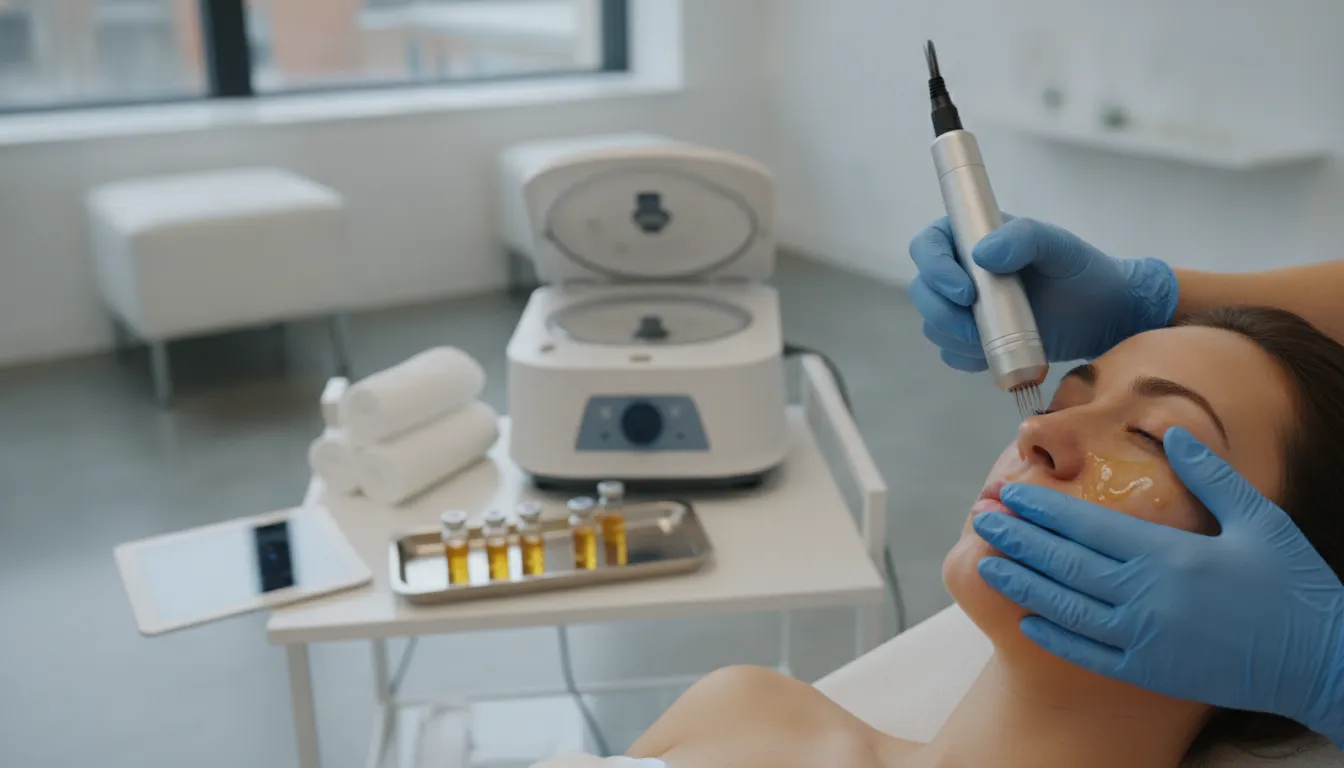
A treatment price can look simple at first, until you start asking what it covers. With microneedling and platelet-rich plasma (PRP), one clinic’s quote may include numbing and PRP preparation, while another may charge for those services separately. The microneedling with PRP cost can also depend on the size of the area treated and how many appointments your provider recommends. Comparing a single-session price alone may not show the whole picture. Before committing, ask for an itemized estimate and discuss your skin concerns with a qualified provider. This guide explains the common cost factors, how to estimate a treatment course, and which questions can help you make an informed choice.
Key Takeaways
- Compare full treatment quotes: Ask what each price includes, from consultation and PRP preparation to aftercare and follow-up visits.
- Budget for the recommended course: Multiply the per-session fee by the number of visits, then check package terms, cancellation policies, and financing costs.
- Make an informed treatment choice: Discuss your skin concerns, health history, realistic results, risks, and alternatives with a qualified provider before booking.
What Is Microneedling With PRP?
Microneedling with platelet-rich plasma (PRP) combines a procedure that makes tiny, controlled punctures in the skin with PRP prepared from a small sample of your blood. The aim is to support the skin’s healing response and improve the appearance of certain concerns. Your provider applies the PRP to the treated area after microneedling.
The treatment is sometimes marketed as a “vampire facial,” though the name does not tell you exactly how a clinic performs the procedure. Treatment depth, PRP preparation, and aftercare can vary. Before booking, ask who will perform each step, what the process involves, and what results are realistic for your skin. A dermatologist can assess your concerns and discuss whether microneedling with PRP or another approach may fit your goals.
How microneedling creates controlled micro-injuries
Microneedling, also called collagen induction therapy, uses a device with fine, sterile needles to make tiny punctures in the skin. These controlled micro-injuries prompt the body’s natural healing response, which includes producing collagen and elastin. These proteins help support the skin’s structure and elasticity.
The provider adjusts the treatment approach based on the area and concern being treated. The procedure may cause temporary redness, sensitivity, or discomfort, and the depth of treatment can affect recovery. Ask how your skin will be assessed and what to expect afterward. Advanced Dermatology and Skin Surgery explains how microneedling works.
How providers prepare PRP from your blood and apply it
To prepare PRP, a provider draws a small sample of your blood and places it in a centrifuge. Spinning the sample separates its components and concentrates platelets, which contain growth factors involved in healing and tissue repair.
After microneedling, the provider applies the prepared PRP to the treated skin. The tiny channels made by the needles may allow the PRP to reach the skin more readily. Clinics may use different preparation and application methods, so ask who handles the blood sample, how the equipment is kept sterile, and what the procedure includes. PRP comes from your own blood, but the treatment still has potential risks and may not be suitable for everyone. Learn more about PRP preparation and application.
Skin concerns it may address, and its limits
Microneedling with PRP may be offered to improve the appearance of acne scars, enlarged pores, uneven skin tone, fine lines, wrinkles, and sunspots. The degree of improvement can vary based on the concern, its severity, your skin, and the treatment plan. This is a minimally invasive procedure, but it cannot address every skin concern, and results are not guaranteed.
Ask your provider to assess your skin and explain what kind of change may be realistic for you. They can also discuss whether another treatment might better suit your needs. A overview of microneedling with PRP lists concerns the procedure may address, but an individual assessment is important before deciding whether to proceed.
How PRP compares with microneedling alone
Research has not established that PRP always improves results beyond microneedling alone. Some split-face studies compare microneedling by itself on one side of the face with microneedling plus PRP on the other. These studies have reported greater improvement or faster healing on the PRP-treated side. Other trials have found no meaningful added benefit from applying PRP for acne scars.
For patients, the practical point is that PRP may help, but it is not a guaranteed upgrade. Ask your provider what evidence applies to your concern, how they assess results, and whether the additional cost is worthwhile for your goals. The research discussion on microneedling with PRP describes both positive findings and studies that did not show a clear added benefit.
How Much Does Microneedling With PRP Cost?
Microneedling with platelet-rich plasma (PRP) often costs several hundred dollars per session, but your total depends on the clinic, treatment area, and services included. Ask for an itemized quote so you can compare prices and understand what you’ll pay throughout your treatment plan.
Typical cost: about $300–$800 per session
Microneedling with PRP may cost about $300 to $800 per session, according to Golden Pulse’s pricing overview. This is a general estimate, not a set price. Your clinic may quote a different amount based on its location, the provider’s approach, and the area you want treated.
When you request a quote, ask whether the price is for one session and whether it applies to your treatment area. A rate for a small area may differ from the price for a full-face treatment. Confirm what the clinic includes, such as PRP preparation, numbing cream, and aftercare instructions, and ask about any separate consultation or follow-up fees.
How it compares with microneedling alone
Microneedling alone has a reported national average cost of about $938, with prices ranging from $686 to $1,515, according to CareCredit’s microneedling cost guide. These figures come from a different source than the estimate for microneedling with PRP, so they may reflect different providers, locations, treatment areas, or services. They aren’t a direct comparison of the two treatments.
For a useful comparison, ask clinics to price both options for the same treatment area and explain what each quote includes. You can also ask whether PRP is optional and what benefits or limitations your provider expects for your skin concerns. Cost is one part of the decision; your provider can help you weigh it alongside your goals and medical history.
What the price may include: consultation, numbing, and aftercare
A clinic may include a consultation in the treatment price or charge for it separately. During a consultation, your provider can review your health history, discuss your skin concerns, and explain whether treatment may be appropriate. Ask what the consultation covers and whether its fee is applied to the procedure if you decide to proceed.
A topical anesthetic is often used to help reduce discomfort. The clinic should also explain how to care for your skin after treatment, though products and follow-up visits may cost extra. Request a written breakdown that lists the consultation, microneedling, PRP preparation, numbing, aftercare products, and any follow-up appointments. Knowing what is included makes it easier to compare quotes and plan for the full expense.
Why your final quote may differ from advertised starting prices
An advertised price may be a starting rate rather than the amount you’ll pay. Your final quote can depend on the clinic’s location, the provider, the treatment area, and the specific services included. The amount of PRP used or additional treatments may also affect the total.
Before booking, ask whether the advertised price applies to your treatment area and whether it requires purchasing a package. CareCredit notes that microneedling prices can vary by location and provider. Request itemized quotes from qualified clinics and check that they cover the same services before comparing them. If a price is unclear, ask the clinic to explain any added fees, package conditions, or costs for follow-up care.
Why insurance generally doesn’t cover cosmetic treatment
Health insurance generally does not cover microneedling performed for cosmetic reasons because insurers typically classify it as an elective treatment rather than medically necessary care. Coverage depends on your plan and the reason for treatment, so contact your insurer if you believe your situation may qualify.
Ask the clinic how payment works: you may pay per session or be asked to pay upfront for a package. Review package terms, cancellation policies, and financing costs before agreeing. If you plan to use a health spending account or another benefit, check with the plan administrator to confirm whether the procedure is eligible. A clinic’s payment or financing options do not mean your insurance will reimburse you.
What Affects the Cost of Microneedling With PRP?
The price of microneedling with platelet-rich plasma (PRP) can vary between clinics. Your quote may depend on who performs the procedure, where you receive treatment, the area being treated, and what the fee covers. Ask for an itemized estimate so you can compare the same services, rather than relying on advertised starting prices alone.
Provider qualifications and experience
The provider’s training and experience, as well as the clinic setting, may influence the fee. Requirements for who can perform microneedling differ by state, so check local regulations and ask about the credentials of the person who will treat you. During a consultation, ask who will perform each step, including drawing your blood, preparing the PRP, and applying it. A qualified provider should also discuss whether the procedure is appropriate for your skin concerns, what results may be realistic, and what risks to consider. The microneedling cost guide advises patients to check local requirements and choose a properly qualified practitioner.
Location and clinic setting
Your location can affect the price. Clinic expenses, local demand, and the type of practice may all contribute to what you’re charged. One cost guide reports state averages ranging from $812 in Arkansas to $1,141 in California. Treat these figures as general reference points, not a prediction of your personal quote. Fees may also differ between dermatology offices, medical spas, and other clinics. When comparing prices, check whether each estimate covers the same treatment area and services. A lower advertised price may exclude the consultation, numbing cream, or aftercare guidance, so ask what is included before you book.
Treatment area and PRP amount
The size of the treatment area and the amount of PRP used can affect the total price. Treating a small area may cost less than treating the full face or face and neck, which can take more time and supplies. Your skin concern and its severity may also shape the recommended plan, including how many sessions your provider suggests. Because PRP is prepared from a sample of your blood, the amount used may vary by treatment. Ask how the quote reflects your treatment area and goals. A PRP microneedling cost guide lists treatment area, skin concerns, session count, and PRP amount among the factors that may affect cost.
Equipment, PRP preparation, and treatment approach
The equipment and supplies a clinic uses, along with its PRP preparation process, may contribute to the price. Treatment involves collecting a blood sample and processing it before the prepared plasma is applied. Clinics may use different equipment and protocols, so ask what the fee covers and how the practice handles preparation and hygiene. The treatment approach can also vary. Some providers combine microneedling with PRP or other topical products, which may involve extra materials or preparation. Ask what products and steps are included in your quote. This can help you understand whether two services advertised as microneedling with PRP are actually comparable. The microneedling cost guide notes that PRP and other products can affect the overall price.
Add-ons, packages, promotions, and financing terms
Packages and promotions can change the amount you pay, but review the terms before committing. Ask whether a package covers the full course your provider recommends, whether unused sessions can be refunded or transferred, and whether there are expiration dates or cancellation fees. Check whether optional add-ons cost extra. Microneedling with PRP is generally considered cosmetic, so health insurance typically does not cover it. Depending on your plan and eligibility, you may be able to use funds from a Health Savings Account (HSA). If you’re considering a payment plan, review any fees, interest, and payment schedule. Ask the clinic for the total cost in writing, including services not covered by a promotion, so you can compare options clearly.
How Many Sessions Might You Need, and What Could They Cost?
The number of microneedling with PRP sessions you may need depends on your skin concerns, treatment area, and goals. Your provider can recommend a schedule after assessing your skin and reviewing your medical history. Before committing, ask for a plan that lists the expected number of visits, the time between them, and the estimated total cost.
A per-session price is only one part of the budget. Consultation fees, aftercare products, optional treatments, and possible maintenance visits can affect what you pay overall. Use your provider’s itemized quote to compare plans and decide whether the timing and expense fit your needs.
Common plans: about three to six sessions
Microneedling with PRP is often planned as a series rather than a one-time treatment. Some providers recommend about three to six sessions, though your plan may differ depending on the area being treated, your skin concerns, and your goals. The number of visits is not a guarantee of a particular result. Ask your dermatologist why they recommend a specific course and when they will assess your progress. This overview of microneedling with PRP describes a commonly suggested range and treatment schedule.
Why providers space sessions several weeks apart
Sessions are commonly scheduled about four weeks apart. Spacing treatments gives your skin time to recover and lets your provider check how it responds before planning the next visit. The right interval can vary based on your skin, healing, and treatment approach. Don’t schedule extra sessions sooner than recommended to try to speed up results. Ask your provider how long they suggest waiting between appointments, what recovery signs to watch for, and whether your plan might change based on your response.
Estimate your full course using the per-session quote
One published estimate puts microneedling with PRP at about $300 to $800 per session, though your clinic’s price may fall outside that range. As a simple example, three sessions at those rates would total about $900 to $2,400; six would total about $1,800 to $4,800. These figures don’t include additional fees or services. Request an itemized quote and ask whether each appointment includes PRP preparation, numbing, and aftercare. This microneedling with PRP cost estimate outlines factors that may affect the price.
Ask whether you may need maintenance sessions
After completing an initial series, you may want to ask whether your provider recommends maintenance treatments. The need and timing depend on your skin’s response and your goals. One cost guide notes that some providers may space follow-up sessions six to eight weeks apart, but that schedule may not apply to everyone. Ask whether maintenance is part of your proposed plan, when your provider would reassess your skin, and what each additional visit would cost. CareCredit’s microneedling cost guide discusses maintenance and other expenses to consider.
Budget for consultation fees, aftercare, and optional add-ons
Before booking, find out whether your quote includes the consultation, numbing cream, PRP preparation, and recommended aftercare products. Ask about add-ons and whether your provider considers them appropriate for your concerns. You can also check for package terms, cancellation fees, and payment plans, then compare the total cost rather than focusing only on a per-session price. Microneedling is generally considered cosmetic, so health insurance usually does not cover it. Ask your insurer and provider about your specific payment options before you schedule.
What Results and Recovery Can You Expect?
Microneedling with platelet-rich plasma (PRP) may improve the appearance of skin over time, but results and recovery differ from person to person. Your experience can depend on your skin, the concern being treated, the treatment approach, and how your skin heals. A qualified provider can explain what may be realistic for you and how many sessions they recommend.
You may have temporary redness, swelling, or sensitivity before you notice any visible changes. Ask your provider what to expect, how to care for your skin, and which symptoms should prompt a call to the clinic. The guidance below can help you prepare for that conversation.
When changes may appear and how they may develop
Some patients notice brighter or more hydrated-looking skin once initial redness settles, which may be around a week after treatment. Changes in texture, pores, or acne scars can take longer to assess because they develop gradually. Your provider may recommend several sessions, spaced weeks apart, before reviewing your progress.
Try not to judge the outcome while your skin is still red or irritated. Photos taken before treatment and at intervals recommended by your provider can help you compare changes under similar lighting. One clinic reports that some patients see a fresher appearance after about a week, but individual timing varies, and this is not a guaranteed result. Read about the reported timeline.
Why results vary and aren’t guaranteed
Results can vary based on the skin concern being treated, its severity, your healing response, and the treatment plan. PRP preparation and application methods also differ between clinics. Before treatment, ask your provider what kind of improvement may be realistic for your concern, how many sessions they suggest, and when they will assess your progress.
Research on whether PRP adds benefit to microneedling is mixed. Some split-face studies, which compare microneedling alone with microneedling plus PRP on the same patient, report greater improvement or faster healing on the PRP-treated side. Other trials found no meaningful added benefit for acne scars. PRP may help some patients, but the evidence does not guarantee a better outcome for everyone. Review findings from studies of microneedling with PRP.
What treatment may feel like, including possible discomfort
Your provider may apply numbing cream before treatment. Even with numbing, you may feel pressure, prickling, warmth, or brief stinging as the microneedling device moves over your skin. Sensations can vary depending on the treatment area, needle depth, and your personal sensitivity. Let your provider know if you feel significant discomfort so they can pause or adjust the treatment.
PRP may feel wet or slightly sticky when applied. In one clinical study, about half of participants reported pain or discomfort, as well as burning or stinging, during microneedling. This finding cannot predict how treatment will feel for you, but it is worth asking the clinic what numbing options are available and which sensations are expected. See the study’s findings on patient experiences.
Common short-term effects: redness, swelling, and sensitivity
Redness, mild swelling, irritation, and sensitivity are common short-term effects after microneedling with PRP. Your skin may also feel warm or tight. These reactions are generally temporary, though their intensity and duration can vary with your skin, treatment area, and treatment settings.
Before your appointment, ask which effects your provider expects and how long they may last. Follow the clinic’s instructions for cleansing and applying skin-care products, and avoid using new or irritating products until your provider says they are appropriate. Contact the clinic if you notice worsening pain, spreading redness, unusual drainage, fever, or another symptom that concerns you. Reviews describe mostly minor, temporary reactions, but your clinician should discuss risks specific to your health and treatment. Learn more about reported short-term reactions.
How long recovery may take and how to protect your skin from the sun
Many patients can return to normal activities within about 24 hours, although redness or sensitivity may continue for longer. Your provider may advise avoiding direct sun exposure and harsh skin-care products for several days. Follow the clinic’s specific aftercare instructions, since recovery can depend on the treatment intensity and your skin’s response.
While your skin heals, limit sun exposure and ask your provider when to resume sunscreen and which type to use. They may also recommend shade, a hat, and a temporary pause on exfoliants or other potentially irritating products. Recovery estimates are not guarantees. Ask what is typical for your treatment and when to call if your skin is not healing as expected. Review general recovery and aftercare guidance.
What research and before-and-after photos can—and can’t—show
Research can help you understand possible benefits and risks, but studies may use different PRP preparation methods, treatment settings, and ways of measuring results. Findings from one study or treatment protocol may not apply to every patient. Ask your provider how the available evidence relates to your concern and whether microneedling alone or another treatment may be suitable.
Before-and-after photos show examples, not a prediction of your result. Lighting, camera angle, facial expression, and the time between photos can affect how skin appears. Look for images taken under similar conditions, and ask whether they feature patients with concerns like yours. A helpful consultation should cover your goals, the limits of treatment, and the options available. Explore an overview of the mixed evidence on PRP.
What Safety Considerations Should You Discuss?
Microneedling with platelet-rich plasma (PRP) involves making tiny openings in the skin and applying a preparation made from your blood. As with any procedure that affects the skin, safety depends on careful hygiene, a qualified provider, and a clear plan for your care before and after treatment. Temporary redness, swelling, and irritation are common, but infection, scarring, and changes in skin color can also occur.
Use your consultation to ask how the treatment will be performed and whether your health history makes it a suitable option. Tell the provider about medications, skin conditions, recent procedures, allergies, and any history of delayed healing or raised scars. A responsible provider should explain the possible risks, answer your questions, and give you written aftercare instructions. Don’t feel pressured to proceed if you’re unsure or your concerns haven’t been addressed. The questions below can help you prepare for a thoughtful conversation.
Confirm your provider’s training and experience
Ask who will perform the treatment and what training they have in microneedling and PRP. You can also ask how often they perform the procedure, how they assess your skin, and how they respond to complications. Requirements for performing these treatments vary by location, so check that the provider meets local licensing and supervision rules.
Experience can help a provider adjust the treatment to your skin and the area being treated. Ask whether they have treated people with concerns similar to yours, and request realistic information about expected results and recovery. A review of microneedling with PRP describes common reactions as mild and temporary, but the procedure still has risks and may not suit everyone.
Ask how the clinic sterilizes equipment and prepares PRP
Ask whether the microneedling device uses a new, sterile, single-use needle cartridge for your appointment. The provider should open it before treatment and dispose of it safely afterward. Reusable equipment and surfaces should be cleaned and disinfected according to the manufacturer’s instructions and the clinic’s infection-control procedures.
Because PRP is made from your blood, ask how the clinic labels, handles, and processes your sample to prevent mix-ups or contamination. The blood draw and preparation should use sterile supplies and a clean setup. You can also ask what the clinic does if packaging is damaged or equipment may no longer be sterile. If the provider can’t explain the process clearly, or you notice unsafe handling, pause and ask questions before treatment begins.
Share your medical history, skin concerns, and medications
Give your provider a complete health history, including skin conditions, allergies, past procedures, and any history of poor wound healing or raised scars. Mention active or recent acne, cold sores, rosacea, eczema, or irritation in the treatment area. These details can affect whether treatment should proceed, be adjusted, or be postponed.
List all medicines and supplements you take, including blood thinners and anything that may affect bleeding or healing. Share any current or recent isotretinoin use, too. Don’t stop a prescribed medication on your own to prepare for treatment. Your provider may recommend checking with the clinician who prescribed it before making a decision. A PRP microneedling guide also advises discussing medications and health conditions that may affect healing.
Discuss risks, side effects, and written aftercare instructions
Ask the provider to explain common short-term effects and less common complications before you consent. Temporary redness, swelling, sensitivity, itching, peeling, pinpoint bleeding, and bruising may occur. More serious problems can include infection, allergic reactions, dermatitis, unusual scarring, or changes in skin color. Your individual risk depends on factors such as your health, skin condition, and how the procedure is performed.
Request written aftercare instructions that explain how to cleanse and moisturize your skin, which products to avoid, and when to resume your usual routine. Ask how long to avoid direct sun exposure and what sun protection to use while your skin recovers. You should also know whom to contact with concerns and which symptoms need prompt medical attention. This microneedling procedure guide outlines potential side effects to discuss with your provider.
Ask how infections, bleeding disorders, or blood thinners may affect your eligibility
Tell your provider if you have a bleeding or clotting disorder, take blood thinners, or have a condition that affects your immune system or wound healing. These factors may increase the chance of bleeding, bruising, or other complications. Your provider may recommend postponing or avoiding treatment, or getting advice from another clinician. Don’t stop or change a prescribed blood thinner without guidance from the clinician who manages it.
An active skin infection, open wound, or significant irritation in the treatment area may also make microneedling unsuitable until the skin has healed. Ask how the provider will assess these concerns and whether they need input from your primary care clinician or specialist. A microneedling safety guide lists bleeding and clotting conditions, open or irritated skin, and active infection among issues to review before treatment.
Discuss pregnancy, breastfeeding, recent procedures, and isotretinoin use
Tell your provider if you’re pregnant, breastfeeding, have recently given birth, or are planning another procedure in the same area. A clinic may recommend postponing elective microneedling during pregnancy or breastfeeding. Suitability, including the use of related products such as numbing creams, needs individual review. Ask about the clinic’s policy and whether you should speak with another clinician.
Mention recent laser treatments, chemical peels, surgery, or other procedures, since your skin may need time to recover. Also disclose current or recent isotretinoin use. The appropriate timing can depend on your treatment history and your prescribing clinician’s advice, so don’t rely on a general waiting period. A PRP microneedling overview notes that pregnancy, active skin problems, and recent isotretinoin use may affect eligibility.
Know when to postpone treatment or seek medical advice
Postpone your appointment and contact the clinic if you develop a cold sore, an active infection, a new wound, or a flare of acne, rosacea, or another inflammatory skin condition in the treatment area. Treating irritated or broken skin may raise the risk of complications. Tell the provider about any changes to your health or medications since your consultation.
After treatment, contact your provider if redness, pain, swelling, or warmth worsens instead of gradually settling, or if you notice pus, fever, a spreading rash, or another unexpected symptom. Seek urgent medical care for severe symptoms such as trouble breathing or facial swelling. Before your appointment, ask how to reach the clinic after hours and when to seek care elsewhere. A PRP microneedling resource advises against treating active acne, rosacea, or other inflammation.
How Can You Decide If the Cost Fits Your Budget?
Before booking microneedling with PRP, look beyond the price of a single session. The total cost may include a consultation, a series of treatments, aftercare products, and follow-up visits. You’ll also want to understand what results your provider expects, how long treatment may take, and whether another option could suit your goals better.
Start by asking for a written estimate and a clear explanation of the recommended plan. A trustworthy provider should be willing to discuss what each fee covers, why they recommend a particular number of sessions, and what could affect your results. You don’t need to decide during the consultation. Take time to compare options and consider whether the full plan feels manageable alongside your other expenses.
The questions below can help you assess the cost and make an informed decision. If something in the quote or treatment plan is unclear, ask for clarification before paying a deposit or purchasing a package.
Compare itemized quotes instead of headline prices
An advertised price may cover only part of treatment. Ask each clinic for an itemized quote showing the cost per session and whether it includes the consultation, numbing cream, PRP preparation, aftercare products, or follow-up visits. Microneedling with PRP commonly costs about $300 to $800 per session, though the final price can vary with the treatment area, your skin concerns, and the plan your provider recommends. Review the factors that can affect PRP microneedling costs before contacting clinics. When comparing quotes, make sure they cover the same services and treatment areas. A lower starting price may not be the less expensive option if key fees are added later.
Ask what the consultation includes and what you’ll discuss
Find out whether the consultation has a separate fee and whether it will be credited toward treatment. Use the appointment to discuss your goals, medical history, skin-care routine, medications, and recent procedures. These details can help your provider decide whether microneedling with PRP is appropriate and explain what results may be realistic for you. Ask whether the consultation includes guidance on products to use or avoid before and after treatment, and whether follow-up care has an additional cost. CareCredit’s guide to microneedling costs notes that providers may review health history and skin-care needs when planning treatment. You should leave with a clear recommendation and enough information to decide without pressure.
Review package terms, cancellation policies, and financing costs
A multi-session package may reduce the cost per visit, but check the terms before paying upfront. Ask how long you have to use the sessions, whether they’re transferable, and what happens if your provider recommends stopping treatment. Read the cancellation and rescheduling policies, including any fees or deposit rules. If you’re considering financing, confirm the interest rate, repayment period, and total amount you’ll pay. Cosmetic microneedling is generally not covered by health insurance. Some people may be able to use HSA funds, depending on their plan and the treatment. CareCredit outlines common payment options, but check with your insurer or HSA administrator to confirm your eligibility before counting on coverage.
Compare alternatives, expected benefits, and limitations
Ask whether microneedling alone or another treatment could address your concern at a lower cost. PRP may offer added benefits for some patients, but the potential results depend on the concern being treated and individual factors. Research on acne scars includes split-face studies, in which one side of the face receives microneedling alone and the other receives microneedling with PRP. Some studies report greater improvement and faster healing on the PRP-treated side, but that doesn’t guarantee the same outcome for you. Ask your provider to explain the likely benefits, risks, and limitations of each option, as well as the evidence behind their recommendation. You can also discuss what to expect if you choose a less costly treatment or decide to wait.
Weigh the full treatment plan against your goals, timeline, and budget
Estimate the full cost before booking. Multiply the per-session quote by the number of sessions your provider recommends, then add consultation fees, aftercare, and optional services. A common plan involves three to six sessions spaced about four weeks apart, although your provider may suggest a different schedule. Because collagen changes develop gradually, results take time and vary from person to person. Ask whether maintenance sessions may be appropriate and what they could cost. Learn more about treatment planning for microneedling with PRP, then compare the expected timeline with your schedule and goals. Choose a plan you can comfortably afford without depending on a particular result.
Related Articles
- Microneedling with PRP St. Petersburg | Dermal Fillers Tampa
- Microneedling with PRP & CO2 Laser Resurfacing – Priya Nayyar, M.D.
- Platelet-Rich Plasma, PRP St. Petersburg, FL | DERMACLINIQUE
- Microneedling in St. Petersburg, FL | Dermaclinique
- Regenerative Hair Restoration – Priya Nayyar, M.D.
Frequently Asked Questions
How much does microneedling with PRP usually cost?
A general estimate is $300 to $800 per session, but your price may differ based on the treatment area, clinic, and services included. Ask for an itemized quote that covers the full cost of your recommended plan.
How many sessions might I need?
Some treatment plans include three to six sessions, often spaced several weeks apart. Your dermatologist can recommend a schedule based on your skin and goals, then reassess your response as treatment progresses.
When might I see results?
Some people notice changes in their skin’s appearance after the initial redness settles, while changes in texture or acne scars may take longer and require multiple sessions. Results vary, and improvement is not guaranteed.
Is PRP more effective than microneedling alone?
PRP may offer added benefits for some patients, but research findings are mixed. Ask your provider what evidence applies to your skin concern and whether the additional cost makes sense for your goals.
Does insurance cover microneedling with PRP?
Insurance generally does not cover the procedure when it’s done for cosmetic reasons. Check with your insurer about your specific plan, and ask the clinic about payment terms, package rules, and any extra fees.