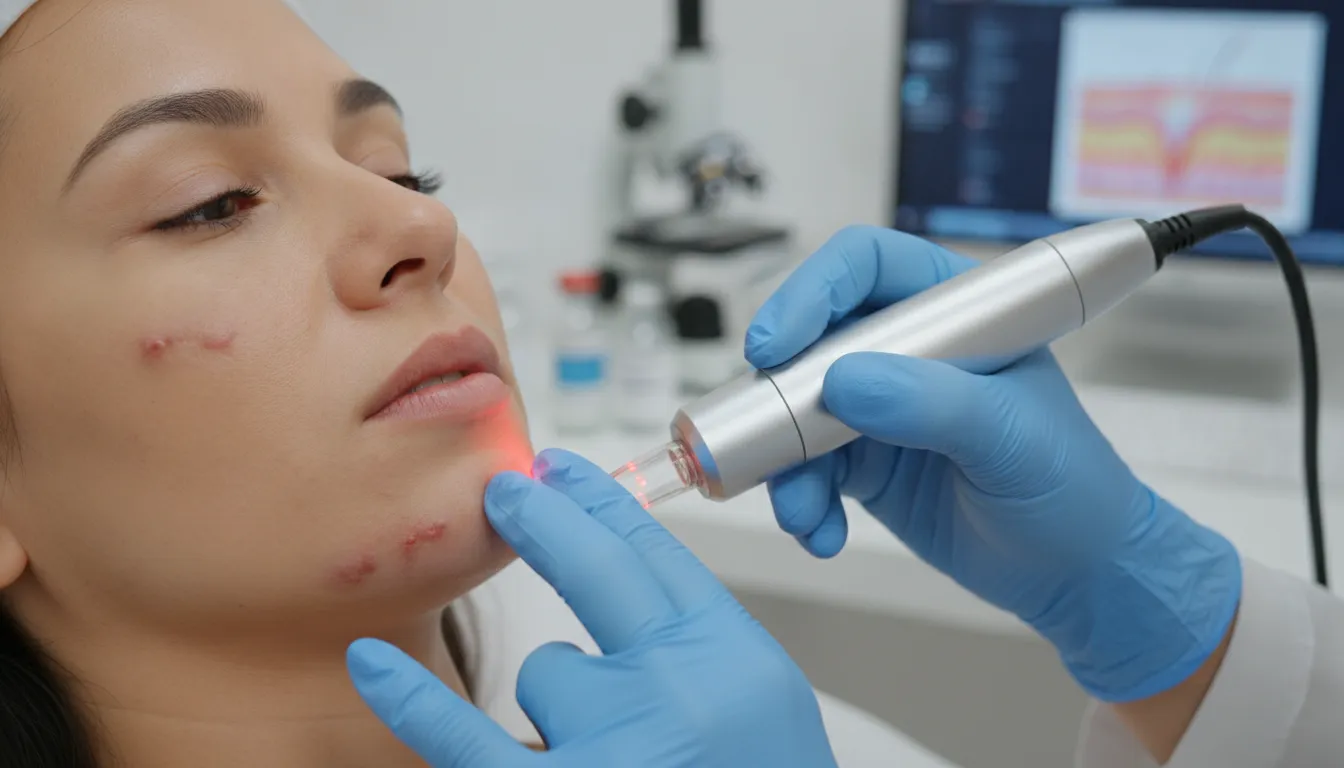
Not every mark left by acne is a scar. Some spots are flat areas of discoloration that gradually fade, while others involve lasting changes in skin texture. Indented scars, raised scars, and dark marks can appear together, so it can be difficult to tell what you’re treating by looking in the mirror. Choosing acne scar treatment starts with identifying the concern and understanding what may help. A dermatologist can assess your skin and discuss options based on scar type, depth, tone, and healing history. Learn what professional procedures and at-home care can realistically address, and how to prepare for a personalized consultation.
Key Takeaways
- Know what you’re treating: Acne scars change skin texture, while discoloration is usually flat. A dermatologist can help identify the difference.
- Choose care based on scar type: Indented and raised scars need different approaches. Discuss your skin, goals, costs, risks, and recovery with a dermatologist.
- Manage acne and protect your skin: Treating active breakouts can help reduce new marks. Follow professional aftercare advice and use broad-spectrum SPF 30 or higher daily.
What Counts as an Acne Scar?
An acne scar is a lasting change in the skin’s texture or shape after a breakout heals. It may appear as an indentation or a raised area, depending on how the skin repairs itself. Identifying the scar type can help you and your dermatologist choose treatments that fit your skin.
How Acne Inflammation Changes Skin Texture
When acne inflammation reaches deeper layers of the skin, it can damage collagen, a protein that helps support skin structure. As the skin heals, it may produce too little collagen, leaving an indentation, or too much, creating a raised scar. Deeper or more inflamed breakouts may be more likely to affect skin texture, though even severe acne does not always leave a scar.
A dermatology overview of acne scar treatment explains how inflammation can injure the skin’s deeper support structure. Treating active acne early can help reduce the chance of new breakouts and scars. If you notice lasting changes in texture, a dermatologist can assess your skin and discuss care options.
Atrophic Scars: Rolling, Boxcar, and Ice-Pick
Atrophic scars are indentations that form when the skin loses support beneath its surface. Rolling scars create broad, wave-like dips. Boxcar scars are wider depressions with more defined edges, while ice-pick scars look like small, narrow openings that extend deeper into the skin.
More than one type can appear on the same person, and scar depth can vary. This matters because different patterns may call for different treatments. A dermatologist can examine the shape and depth of your scars before recommending an approach. Review common acne scar types to see how these indented scars differ.
Raised Scars: Hypertrophic Scars and Keloids
Raised acne scars form when the skin produces excess collagen as it heals. Hypertrophic scars remain within the area of the original breakout and may feel firm or look pink. Keloids can grow beyond the original spot and may appear red, purple, or darker than the surrounding skin.
Although both types are raised, they develop differently and may need different care from indented scars. Avoid trying to flatten a raised scar with harsh products or at-home tools, which can irritate the skin. A dermatologist can identify the type of scar, consider your skin and health history, and discuss suitable treatment options.
How Can You Tell Acne Scars From Lingering Discoloration?
Look at both the texture and color of the area. Acne scars change the skin’s surface, creating depressions, unevenness, or raised spots. Lingering discoloration is usually flat: it changes the color of the skin without changing how it feels. You can have both at the same time, such as a pitted scar surrounded by a dark mark.
The difference matters because texture scars and flat marks may need different care. Deeper acne inflammation can damage collagen beneath the skin, while discoloration often appears as the skin heals after inflammation. The American Academy of Dermatology explains how acne scars form. If you’re unsure what you’re seeing, a dermatologist can assess the area and discuss suitable options.
Compare Raised or Indented Texture With Flat Marks
Check the area in bright, even lighting, and view it from the front and side. An indentation may cast a small shadow or look more noticeable when light hits from an angle. Rolling scars can make the skin look gently wavy, while boxcar and ice-pick scars create more defined depressions. Raised scars may feel thicker or firmer than nearby skin.
A smooth, flat area is more likely to be discoloration than a texture scar, even if the color is prominent. Try not to squeeze or rub it, since irritation can prolong inflammation. Acne-related texture changes can result when inflammation injures collagen beneath the surface, as described in this overview of how acne scars form. A dermatologist can help identify the change if it’s hard to assess at home.
Distinguish Brown or Gray Hyperpigmentation From Pink or Red Marks
Flat brown or gray marks may be post-inflammatory hyperpigmentation, or PIH. This happens when inflammation prompts the skin to produce extra pigment. PIH can affect any skin tone, and it may be more noticeable or last longer in darker skin. DermNet’s overview of post-inflammatory hyperpigmentation explains why dark marks can remain after a blemish heals.
Pink or red marks may reflect lingering inflammation rather than extra pigment. This type of color change is sometimes called post-inflammatory erythema. The distinction is not always easy to make by sight, and redness can look different across skin tones. Color alone can’t confirm what’s happening, so seek a dermatologist’s advice if a mark is raised, indented, painful, or changing.
See Why Discoloration Can Fade—and When to See a Dermatologist
Flat marks often fade gradually as the skin heals, though the timeline varies. Some lighten over several months, while others last longer. Sun exposure can make dark marks more noticeable, so daily broad-spectrum sunscreen can help protect the area. Picking at blemishes or using products that irritate your skin may also prolong discoloration.
Consider booking a dermatology appointment if you’re unsure whether a mark is flat or scarred, it isn’t fading, or new marks keep appearing while acne is active. A dermatologist can assess your skin and recommend care based on the type of mark and your skin tone. Seek an assessment sooner if a spot is painful, rapidly changing, or unusually firm. An accurate diagnosis helps guide care, since treatments for discoloration and raised or indented scars can differ.
Which Acne Scar Treatment Suits Each Scar Type?
The best treatment depends on the kind of scar you have. Rolling scars are often tethered beneath the skin, while boxcar and ice-pick scars have distinct shapes and depths. Raised scars, including keloids, involve excess scar tissue and need a different approach from indented scars. A treatment that helps one type may have little effect on another, so a dermatologist will first assess your skin and identify the scar patterns.
Your plan may also depend on your skin tone, medical history, tendency to develop dark marks, and whether you still have active acne. Some people have several scar types and may benefit from more than one treatment, done in stages. Your dermatologist can explain the expected improvement, number of sessions, recovery time, and possible side effects. The American Academy of Dermatology’s guide to scar treatment offers an overview of why treatment choices vary.
Procedures such as subcision, injections, punch techniques, and strong chemical treatments require professional assessment and should not be attempted at home. Before choosing a treatment, ask how it targets your specific scars and what aftercare you’ll need. Results are generally gradual, and treatment can improve the appearance of scars without guaranteeing that they will disappear completely.
Treat Rolling Scars With Subcision, Fillers, and Collagen-Stimulating Treatments
Rolling scars create broad, wavy depressions, often because bands of tissue beneath the skin pull the surface downward. Subcision uses a needle beneath the skin to release these bands, allowing the indented area to rise. Your dermatologist may recommend subcision alone or combine it with another treatment.
Fillers can add volume beneath selected depressions and smooth the skin’s contour. Results may be temporary, depending on the product, so repeat treatment may be needed. Microneedling and some laser treatments encourage collagen remodeling and may improve texture over a series of sessions. They may not address pronounced tethering on their own. A dermatologist can assess which options fit your scars and discuss risks such as bruising, swelling, or pigment changes. Read more about treatments for rolling acne scars.
Treat Boxcar Scars With Resurfacing, Microneedling, and Punch Techniques
Boxcar scars are indented areas with defined edges and a broad, relatively flat base. For shallower scars, a dermatologist may recommend resurfacing, such as laser treatment, or microneedling to encourage collagen remodeling. Improvement is gradual, and more than one session may be needed.
Deeper scars with sharper edges may call for a targeted punch technique. Depending on the scar, a clinician may raise the base or remove the scar tissue and close the area. The right approach depends on the scar’s depth, your skin tone, and your history of pigmentation changes. Your dermatologist can explain the likely benefits, risks, and recovery time before treatment. Explore treatment options for boxcar scars with a qualified clinician.
Treat Ice-Pick Scars With TCA CROSS and Punch Excision
Ice-pick scars are narrow, deep pits. Because they extend into the skin, broad resurfacing alone may not address them well. One option is TCA CROSS, a procedure in which a clinician carefully applies a high-strength trichloroacetic acid solution inside each scar. The controlled healing response may soften the scar’s appearance over time, often after multiple treatments.
For an isolated, deeper scar, a dermatologist may consider punch excision. This procedure removes the scar tissue with a small tool and closes the site, sometimes with a tiny stitch. Both approaches require clinical expertise. TCA CROSS can cause irritation, scabbing, or changes in skin color, and the potential for pigmentation changes should be discussed before treatment. Ask your dermatologist which option suits your scars and what healing will involve.
Treat Raised Scars and Keloids With Steroid Injections, Silicone, and Other Dermatologist-Led Options
Raised acne scars develop when excess scar tissue forms during healing. Hypertrophic scars stay within the original acne lesion, while keloids can grow beyond it. A dermatologist may use corticosteroid injections to soften and flatten a raised scar. Several treatments may be needed, and injections can sometimes cause thinning or lightening of the skin in the treated area.
Silicone gel or sheets may help manage raised scars when used consistently on healed skin. Depending on the scar, a dermatologist may also discuss options such as laser treatment or cryotherapy, sometimes as part of a combination plan. Keloids can return, so follow-up care is important. Avoid cutting, puncturing, or applying strong acids to a raised scar yourself. The AAD’s guidance on scar treatments explains why care should be chosen with a clinician.
What Professional Acne Scar Treatments Can You Get?
Professional acne scar treatments aim to soften uneven texture, encourage collagen production, or address scar tissue beneath the skin. The right option depends on the type and depth of your scars, your skin tone, your health history, and whether you still have active acne. A dermatologist can examine your skin and explain which treatments may be appropriate, along with likely recovery time and costs.
Some treatments target indented scars, while others may help with raised scars or discoloration. Lasers and microneedling, for example, can improve certain types of uneven texture. Chemical peels may help with selected shallow scars or changes in skin color. Many people need a series of sessions or a combination of treatments, and results tend to develop gradually as the skin heals.
Before choosing a procedure, ask about possible side effects, downtime, aftercare, and how your skin tone may affect the plan. Treatments can cause temporary redness, swelling, peeling, or changes in skin color. The American Academy of Dermatology’s overview of acne scar treatments can help you understand the options to discuss with your dermatologist.
Explore Laser Resurfacing and Other Energy-Based Treatments
Laser resurfacing uses light energy to treat selected areas of skin and prompt a healing response. Fractional lasers target tiny zones while leaving nearby skin untreated. Ablative lasers, including carbon dioxide and erbium lasers, remove some skin tissue. Non-ablative lasers heat deeper layers without removing the surface. Your dermatologist can explain how these approaches differ and whether one may suit your scars.
Laser treatments may soften some rolling and boxcar scars, but they don’t work equally well for every scar type. Redness, swelling, and temporary pigment changes can occur, and recovery time varies by treatment. Skin tone and history of pigmentation changes matter when weighing the risks. Read more about laser options for acne scars, then ask your dermatologist which approach fits your skin and goals.
Consider Microneedling and Radiofrequency Microneedling
Microneedling uses fine needles to create controlled micro-injuries in the skin. As the skin heals, it produces collagen, which may soften the appearance of mild to moderate indented scars. Treatment is usually performed as a series of sessions, rather than a one-time fix. Your provider can recommend a schedule based on your skin’s response.
Radiofrequency microneedling delivers heat through the needles to deeper layers of skin. Both approaches can cause temporary redness, swelling, or tenderness. Microneedling may be considered for a range of skin tones, but it still requires professional assessment, since irritation or pigment changes are possible. The AAD’s acne scar treatment guidance outlines options to discuss with a dermatologist.
Use Chemical Peels for Selected Scars and Discoloration
Chemical peels use a solution to remove outer layers of skin and encourage new skin growth. A dermatologist may recommend a peel for certain shallow scars, uneven texture, or discoloration. The peel’s depth and ingredients affect both the results and recovery. Stronger peels can require more downtime and may carry a higher risk of irritation or pigment changes.
TCA CROSS is a targeted technique in which a professional applies a concentrated acid to individual scars. It may be considered for narrow, deep ice-pick scars and some boxcar scars. Because the solution is strong and must be applied precisely, this procedure should only be performed by a trained professional, not attempted at home. Ask your dermatologist whether a peel or targeted treatment is appropriate for your skin. Learn more about TCA CROSS and acne scars.
Compare Treatment Mechanisms, Risks, and Downtime
Professional treatments work in different ways. Lasers deliver energy to selected skin layers, microneedling creates tiny controlled injuries, and chemical peels exfoliate the skin’s surface. Other procedures may release scar tissue beneath the skin or remove an individual scar. Each approach aims to make scars less noticeable, but no procedure can guarantee that scars will disappear completely.
Recovery depends on the treatment, its intensity, your skin, and your medical history. Redness, swelling, tenderness, peeling, and temporary changes in skin color are possible. Some treatments involve little downtime; others require a longer healing period and careful aftercare. Before booking, ask when you can return to your usual activities, how to care for your skin, and which symptoms should prompt a call to your provider. Following aftercare instructions can help reduce irritation while your skin heals.
Combine or Stage Treatments With a Dermatologist
You may have more than one type of acne scar, and different scars can respond to different treatments. Your dermatologist might recommend one procedure for rolling scars and another for narrow, deep scars. They may also space treatments apart to give your skin time to heal and assess how it responds before changing the plan.
At follow-up visits, tell your provider about any changes in your skin, medications, or acne symptoms. Ask how many sessions they expect you’ll need, what each session costs, and what recovery involves. Your plan may change as your skin heals or your goals evolve. Working with the same dermatologist over time can help them track your progress, manage side effects, and adjust treatment to your needs.
What Can At-Home Acne Scar Care Improve?
At-home care can help manage breakouts, improve some discoloration, and protect healing skin. The best approach depends on whether you’re dealing with a flat mark, an indented scar, or a raised scar. Knowing the difference can help you choose products that fit your concern and set realistic expectations.
Use Retinoids and Other Topicals for Acne and Discoloration
Over-the-counter retinoids, exfoliating acids, and brightening products may gradually improve uneven skin tone. Retinoids can also help unclog pores, which may reduce breakouts that could leave new marks or scars. Start with one active ingredient at a time, follow the label, and watch for dryness, redness, or irritation. Using several potent products at once can make skin more sensitive.
Topicals may help with discoloration and active acne, but they usually cannot rebuild significant collagen loss or substantially change deeper, indented scars. Kucumber Skin Lounge explains the difference between topical care and deeper scar treatment. If you have sensitive skin, ongoing breakouts, or questions about which product to use, ask a dermatologist for guidance.
Wear Sunscreen to Keep Dark Marks From Worsening
Sun exposure can make post-acne dark marks more noticeable and may prolong their appearance. Apply broad-spectrum sunscreen with SPF 30 or higher to exposed skin each day. Reapply according to the label, especially after swimming or sweating. Hats and clothing can offer additional coverage, and it’s best to avoid tanning beds.
Sunscreen won’t remove an existing scar, but consistent protection can help prevent discoloration from becoming darker while skin heals. The American Academy of Dermatology recommends protecting scars from the sun, particularly when clothing doesn’t cover them. If sunscreen stings or irritates your skin, try a different formulation and ask a dermatologist or pharmacist for help finding one that suits you.
Apply Silicone Gel to Raised Scars, Not Indented Scars
Silicone gel or sheets may help soften and flatten some raised scars, including hypertrophic scars and keloids. They may also reduce symptoms such as itching, redness, stiffness, or tenderness. The American Academy of Dermatology notes that silicone sheets may work better than ointment for some people.
Silicone is not designed to fill indented scars, so it’s unlikely to improve rolling, boxcar, or ice-pick scars. Use it only on fully healed skin, and follow the product instructions. If a raised scar is growing, painful, or bothering you, consult a dermatologist. They can confirm the scar type and help you decide whether silicone or another option is appropriate.
Understand Why DIY Procedures and Skincare Can’t Replace Scar-Specific Treatment
Skincare can support skin health, but deeper acne scars often need treatment that addresses changes beneath the surface. An indented scar may involve collagen loss or fibrous bands pulling the skin downward. A raised scar involves excess scar tissue and may need a different approach. A dermatologist can assess the scar type, your skin tone, and your health history before recommending treatment.
Avoid using needles, strong peels, or professional-use devices at home. These can injure or irritate skin and may lead to infection, discoloration, or additional scarring. A dermatologist can explain evidence-based options and help set practical goals. As Golla Dermatology points out, acne scar care aims for meaningful improvement, not perfect skin.
How Does a Dermatologist Personalize Acne Scar Treatment?
Acne scar treatment starts with understanding your skin, not choosing a procedure from a list. A dermatologist looks at the type and depth of your scars, your skin tone, whether acne is still active, and how your skin has responded to past treatments. They’ll also ask what changes matter most to you and what recovery time, cost, and aftercare you can manage.
These details help shape a plan that’s suited to your needs. You may start with one treatment, combine approaches, or space procedures out to see how your skin responds. Your plan can also change over time: follow-up appointments give you and your dermatologist a chance to review your progress and discuss next steps.
Before your consultation, make a list of your medications and skincare products, including acne treatments you’ve used in the past two years. Think about your goals and any practical concerns, such as time away from work or the cost of multiple sessions. Sharing this information openly helps your dermatologist explain your options and recommend a plan that feels realistic for you.
Assess Scar Type, Severity, Location, and Skin Tone
Acne scars can be indented, raised, or a combination of both. Your dermatologist will examine their shape, depth, number, and location to determine which treatments may be appropriate. For example, an approach used for shallow, uneven texture may not be suitable for a deep, narrow scar or a raised scar.
Your skin tone and history of dark marks also matter. Some procedures can cause temporary or lasting changes in skin color, so your dermatologist may adjust the treatment or recommend another option. They’ll consider whether acne is still active and how long the scars have been present, too. The American Academy of Dermatology’s guide to scar diagnosis and treatment explains why a clinician should examine scars before recommending care.
Review Health History, Past Treatments, and Pigmentation Risks
Your dermatologist may ask about your health, medications, skincare routine, and any past reactions to treatments. Tell them about all acne medications you use now or have used in the past two years, including prescription products. Some treatments may need to be delayed or adjusted based on recent medication use.
Also mention if you’re prone to dark marks after irritation, have had a procedure before, or developed an unexpected reaction. These details help your dermatologist weigh potential risks and choose a suitable approach. The AAD’s guidance on acne scar treatment recommends discussing recent acne medications, since they can affect treatment timing and side effects. If you’re unsure whether a product or medication is relevant, bring its name or a photo of the label to your appointment.
Weigh Your Goals, Budget, Downtime, and Aftercare
Let your dermatologist know what you’d most like to change. You may want to focus on a particular scar, improve overall texture, or address several concerns. Be clear about your budget and how many appointments you can fit into your schedule. Some treatments involve a series of visits, while others may require more recovery time after each session.
Ask what to expect afterward, including redness, swelling, peeling, sun protection, and changes to your usual skincare routine. Your dermatologist can explain the likely trade-offs and help you consider which options fit your priorities. Recovery and results vary from person to person, so ask how long you may need to pause certain activities or products. As your skin responds, follow-up visits can help your dermatologist assess progress and adjust the plan if needed.
Prepare Questions and Discuss Options at Your Consultation
A little preparation can help you make the most of your appointment. Bring a list of medications and skincare products, and note any previous acne or scar treatments and how your skin reacted. If you have photos that show how your skin looked before the scars developed, you can bring those as well.
Consider asking which scar types your dermatologist sees, why a treatment may suit your skin, how many sessions may be needed, and what recovery could involve. You can also ask about side effects, aftercare, and total cost. Share any concerns about pain, downtime, or how a treatment might affect your skin tone. Your dermatologist should listen to your goals and explain the options in clear terms. The consultation is a chance to discuss a plan together, including alternatives if the first option doesn’t fit your needs.
Why Should You Control Active Acne Before Treating Acne Scars?
Prevent New Scars While Treating Existing Ones
If breakouts continue while you’re treating acne scars, new inflammation can lead to more marks or changes in skin texture. That’s why many treatment plans focus on controlling active acne before starting certain scar procedures. Some treatments can irritate the skin or aggravate breakouts, so your dermatologist should know about any current pimples, tender spots, or recent flare-ups before recommending a procedure. Scripps Health explains why acne control is an important first step in scar treatment.
You don’t have to wait until your skin is completely clear to book a consultation. A dermatologist can assess your acne and scars together, then decide which treatments are appropriate and when to use them. In the meantime, avoid picking or squeezing blemishes, since added irritation can increase inflammation and the chance of lasting marks. Ask your clinician which acne treatments to continue before and after any planned procedure.
Create an Acne-Control Plan With a Dermatologist
Acne treatments and scar treatments serve different purposes, and the right approach depends on your acne, scar type, skin tone, medical history, and past treatments. A dermatologist can recommend a plan to reduce active breakouts, choose suitable scar treatments, and adjust care if your skin flares or becomes irritated. Share any products or medications you use, along with your concerns about cost, recovery time, and possible side effects.
Scar treatment often takes patience. You may need several sessions, and your clinician may space them out to monitor how your skin responds. Keep follow-up appointments and report any changes or concerns rather than changing your routine on your own. An ongoing relationship with your dermatologist can help guide those adjustments, as Advanced Dermatology & Aesthetic Medicine notes in its acne scar treatment guide.
What Results and Timeline Can You Expect From Acne Scar Treatment?
Acne scar treatment usually aims to make scars less noticeable and improve skin texture, rather than remove every scar completely. Your results and timeline depend on your scar type, skin, treatment plan, and healing response.
Expect Improvement, but Not Guaranteed Scar Removal
Treatment may soften indented scars, improve uneven texture, or make raised scars flatter and less uncomfortable. The amount of improvement varies, and some scars may remain visible even after treatment. Your dermatologist can explain what changes may be realistic based on your scar type, its depth, and your skin.
It can be helpful to take photos before treatment and at follow-up visits. Use similar lighting and angles so you can compare changes over time, since gradual progress may be difficult to notice day to day. As Golla Dermatology explains, acne scar care is often about meaningful improvement, not perfection. Ask your dermatologist how you’ll assess progress and when to review your results.
Understand Why No Treatment Fits Everyone or Works Immediately
Acne scars vary in shape, depth, and cause, so a treatment that helps one type may not be suitable for another. For example, an approach for rolling scars may not work as well for deep ice-pick scars or raised keloids. Skin tone, medical history, and previous reactions to treatment can also affect which options are appropriate. That’s why professional evaluation matters before you choose a procedure.
Results also take time. Some treatments encourage collagen production, and visible changes may develop over weeks or months as the skin heals. Your dermatologist can explain what to expect at each stage and whether a combination of treatments may address different scar features.
Plan for Sessions, Recovery, and Gradual Results
A treatment plan may involve several appointments rather than a single session. The number of treatments and the time between them depend on the procedure, scar severity, healing, and how your skin responds. Some patients have sessions several weeks apart, with progress reviewed over many months. Dr. Biesman describes plans that may include treatments every one to two months and continue for a year or more.
Recovery varies, too. Depending on the procedure, you may have temporary redness, swelling, tenderness, or peeling. Ask your dermatologist how long these effects may last and when you can return to your usual activities. Following the clinic’s recovery instructions can help you care for your skin between appointments.
Follow Aftercare and Reassess Your Plan With a Dermatologist
Aftercare supports healing and helps protect your skin. Your dermatologist may recommend gentle cleansing, moisturizer, and sun protection, and may ask you to pause certain active skincare products. Follow the instructions you receive, and contact the clinic if you have unexpected pain, worsening redness, or another concern.
Keep follow-up appointments so your dermatologist can assess your response and adjust the plan if needed. They may recommend continuing treatment, changing the timing, or considering another option. An ongoing relationship with your clinician helps them tailor care as they learn how your skin heals and responds. Advanced Dermatology & Aesthetic Medicine highlights the value of reassessing treatment over time.
Related Articles
- Acne Scarring St. Petersburg and Tampa | Dermaclinique
- CO2 Laser Resurfacing in St. Petersburg, FL | Dermaclinique
- Cosmetic Dermatology St. Petersburg | The Dermaclinique
- Lasers Archives – Priya Nayyar, M.D.
- Facials St. Petersburg | Dermal Fillers Tampa
Frequently Asked Questions
How can I tell whether I have an acne scar or a dark mark?
Notice whether the skin’s surface has changed. A dip, uneven texture, or raised area may be a scar, while a flat area of color is more likely lingering discoloration. Both can appear together, so a dermatologist can help identify what you’re seeing.
Can acne scars fade without treatment?
Some flat marks fade gradually as the skin heals. Indented or raised scars are less likely to change significantly on their own. A dermatologist can assess the type of change and discuss what may help.
Should I treat active acne before getting scar treatment?
Often, controlling breakouts is an important part of the plan because new inflammation can leave additional marks or scars. You can still schedule a consultation while acne is active. Your dermatologist can decide which treatments are suitable and when to start them.
Can skincare products remove indented acne scars?
At-home products may help manage acne or improve some discoloration, but they generally can’t rebuild lost support beneath deeper scars. Avoid home procedures with needles or strong peels, which can injure the skin. Ask a dermatologist about options for your scar type.
How long does acne scar treatment take to show results?
It varies by treatment, scar type, and how your skin heals. Some plans involve multiple sessions, with changes appearing gradually over weeks or months. Ask your dermatologist about the likely schedule, recovery, and how you’ll track progress.